Brook Trout: Georgia’s Only Native Trout Species
Many anglers dream of chasing trout in Georgia's beautiful mountain streams, but not everyone realizes that among the vibrant rainbows and elusive browns, there's a true native gem – the brook trout. These stunning fish are Georgia's only indigenous trout species, and their story is one of resilience and a testament to the wild, cold waters they inhabit. This guide will dive deep into the world of Georgia's brook trout, revealing their unique characteristics, where to find them in their secluded mountain strongholds, the specialized techniques needed to catch them, and most importantly, how we can all help conserve this precious native legacy.
Understanding the Georgia Brook Trout: A Native Legacy
When you talk about trout fishing in Georgia, most folks immediately think of the feisty rainbow trout or the wily brown trout, which are abundant in many of our popular waters thanks to extensive stocking programs. But the brook trout, or "brookie" as they're affectionately known, holds a special place in the hearts of those who appreciate wild, pristine environments. These aren't just another fish in the stream; they are living relics, a direct link to Georgia's ecological past, adapted perfectly to the highest, coldest reaches of our Appalachian mountains.
Identifying Georgia's Native Beauties
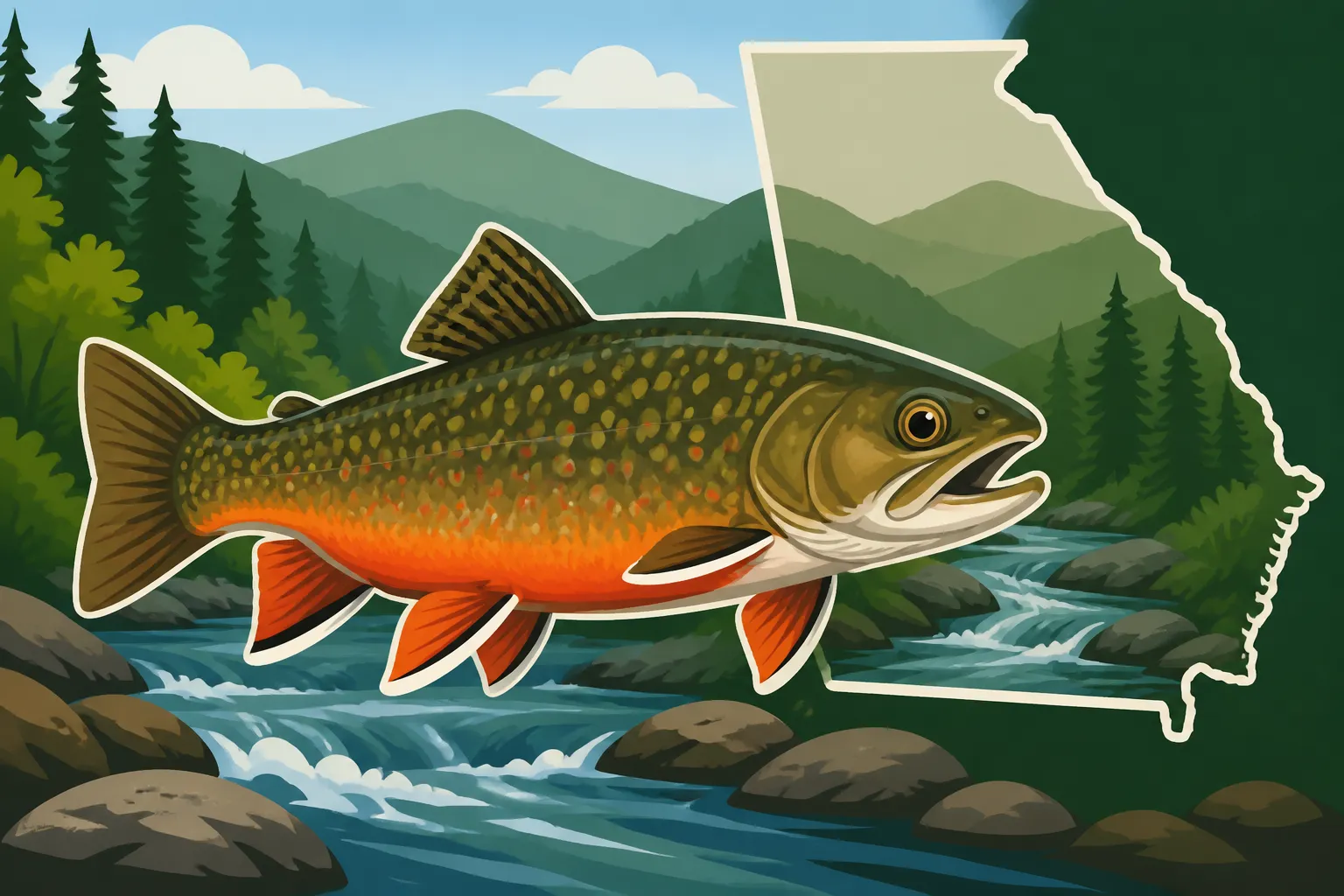
Spotting a Georgia brook trout is like finding a hidden jewel. They are, without a doubt, one of the most strikingly beautiful fish you'll ever encounter. Unlike the more silvery or spotted appearance of their introduced cousins, brook trout boast a kaleidoscope of colors that are truly unique. Their backs are typically olive green, often adorned with wavy, worm-like markings that we call "vermiculations." These intricate patterns are a fantastic camouflage, helping them blend seamlessly with the dappled light and rocky bottoms of their native streams.
As you move down their sides, you'll see a transition to lighter hues, often with vibrant red or orange spots, sometimes haloed with blue. But the real showstopper is their fins, especially their lower fins (pelvic, anal, and caudal), which are rimmed with a brilliant white leading edge, followed by a dark, almost black stripe, and then often a flush of orange or red. This distinctive white leading edge is a dead giveaway and one of the easiest ways to How to Identify a Brook Trout. In fact, if you see a trout in Georgia with those stark white-edged fins, you can be pretty confident you've found a brook trout, especially in those higher-elevation, colder waters.
A Glimpse into History: Why "Native" Matters
The presence of brook trout in Georgia isn't just a biological fact; it's a piece of our state's natural history. These fish have been swimming in the headwaters of our mountain streams since long before European settlers arrived, evolving alongside the unique ecosystems of the southern Appalachians. Their existence predates any human intervention, making them true wild inhabitants. However, this native status also comes with a history of challenges.
In the past, habitat degradation from logging, mining, and agricultural practices, along with competition and hybridization from introduced trout species like rainbow and brown trout, led to significant declines in brook trout populations. Many of their historical ranges were lost, pushing them into smaller, more isolated pockets of prime habitat. Understanding this history is crucial because it underscores the importance of conservation efforts today. When we talk about "native" trout, we're talking about preserving a unique genetic lineage and the health of the delicate ecosystems they represent. Protecting brook trout means protecting the entire web of life in these high-mountain streams.
Comparing Brooks to Other Trout
For many anglers, distinguishing between Georgia's various trout species can sometimes be a bit tricky, especially if you're new to the waters. However, once you know what to look for, brook trout really stand out. While Rainbow Trout Fishing in North Georgia's Mountain Streams offers thrilling action and Brown Trout in Georgia: Where to Find Them are known for their evasiveness, brook trout have a more petite and vibrantly colored charm.
Here's a quick comparison to help you differentiate:
| Feature | Brook Trout (Salvelinus fontinalis) | Rainbow Trout (Oncorhynchus mykiss) | Brown Trout (Salmo trutta) |
|---|---|---|---|
| Native Status | Native to Georgia | Introduced | Introduced |
| Coloration | Olive green back with worm-like vermiculations; red/orange spots with blue halos; white-edged fins. | Silvery to olive back; pink or red stripe along lateral line; black spots on body and tail. | Golden brown to olive back; large dark spots, often with red/orange halos; no spots on tail. |
| Tail Shape | Slightly forked or squared | Slightly forked | Square or slightly forked |
| Body Shape | Slender, torpedo-like | More robust, stockier | Generally more stout and predatory looking |
| Preferred Habitat | Small, cold, high-elevation headwater streams with heavy canopy. | Larger, colder streams and rivers, many stocked lakes. | Larger streams, rivers, and lakes, often more tolerant of warmer water. |
As you can see, the brook trout's unique markings, especially those white-edged fins and worm-like patterns, make them distinct. They also rarely grow as large as the biggest rainbows or browns in Georgia, preferring to stay on the smaller side, which is perfectly suited to their tiny, pristine stream homes. For a deeper dive, check out Brook Trout vs Rainbow Trout vs Brown Trout.
Where to Find Georgia's Elusive Brook Trout
Finding brook trout in Georgia is less about sheer numbers and more about seeking out specific, often remote, habitats. These aren't the fish you'll typically pull from a widely stocked river near a bustling town. No, brook trout demand an adventure, a hike into the unspoiled corners of our Appalachian landscape. They are a reward for effort, a prize for those willing to venture off the beaten path and into the embrace of true wilderness.
High-Elevation Havens: Ideal Brook Trout Habitat
Brook trout are creatures of comfort, and their comfort zone is cold water. We're talking about streams where the water temperatures rarely climb above 65 degrees Fahrenheit, even in the heat of summer. This means you'll find them almost exclusively in the highest elevations of North Georgia, often in the headwaters of larger river systems. Think steep gradients, dense forest canopies providing constant shade, and plenty of oxygenated water tumbling over rocks and small cascades.
These aren't wide, lazy rivers. Instead, envision narrow creeks, sometimes barely more than a trickle, with deep pockets formed by fallen logs, submerged rocks, and undercut banks. The water clarity is usually exceptional, allowing for perfect visibility of the stream bottom. The surrounding forest is vital, as it stabilizes banks, contributes woody debris for cover, and shades the water, keeping it cool. These tiny, pristine environments are their sanctuaries, offering both the temperature stability they need and the abundant invertebrate life they feed on.
Remote Wilderness Streams: The Search for Wild Brooks
If you're truly seeking wild brook trout – the descendants of Georgia's original stock – you'll need to lace up your hiking boots and be prepared for some solitude. Many of the best brook trout streams are found deep within national forests and wilderness areas, far from road access. Places within the Chattahoochee National Forest, particularly the more remote sections, are prime candidates. These streams often require bushwhacking, navigating dense rhododendron thickets, and crossing rough terrain.
The beauty of these remote streams is not just the chance to catch a native brook trout, but the entire experience. You'll be immersed in an ecosystem largely untouched by development, listening to nothing but the sound of the stream and the chirping of birds. It's an opportunity to connect with nature on a profound level, far from the crowds. While I can't name every specific stream (partly to protect these delicate fisheries), dedicated anglers who research topographic maps and seek out the highest, smallest tributaries often find success. These are typically smaller creeks, often referred to as "blue lines" on maps, that are too small or too remote for regular stocking programs. For more guidance on specific areas, researching resources on Where to Catch Native Brook Trout in Georgia can be helpful.
Stocked vs. Wild: What to Expect
It's important to understand that while brook trout are native, not every brook trout you catch in Georgia will be a purely "wild" fish born and raised in that stream. The state does undertake some stocking of brook trout in certain waters, often in an effort to restore populations or provide additional angling opportunities where wild populations are scarce. These stocked brook trout are generally distinguishable by their larger size initially (being hatchery-raised) and sometimes show signs of fin-clipping.
However, the true gems are the wild, naturally reproducing populations. These fish tend to be smaller, often ranging from 4 to 8 inches, but their colors are usually more vibrant, and their fighting spirit is intense despite their size. They are perfectly adapted to their environment. When seeking truly wild brook trout, focus on those small, steep, high-elevation streams that are difficult to access and unlikely to be part of a regular stocking route. These are often the "Blue Ridge WMA trout size limit" streams or those with special regulations, indicating a focus on protecting native populations. Many of these remote areas are listed among the Best Small Streams for Brook Trout in North Georgia.
Fishing Techniques and Gear for Georgia Brook Trout
Successfully catching Georgia's brook trout requires a shift in mindset and technique compared to fishing for larger trout in wider rivers or lakes. These fish are generally smaller, inhabit tight quarters, and, especially in their wild state, can be incredibly wary. Stealth, precision, and an appreciation for delicate presentation are far more important than brute force or long casts. Think of it as a dance, not a battle, where you're trying to fool a creature perfectly adapted to its pristine, secluded world.
Stealth and Presentation: Key to Success
The number one rule when chasing brook trout in their native mountain streams is stealth. These fish live in crystal-clear water, often in very shallow sections, and they are highly sensitive to disturbances. Approach each pool and run slowly and quietly, often crouching or staying low to the ground. Wear natural, subdued colors, and avoid making sudden movements or casting a shadow over the water. Your goal is to be as invisible as possible.
When it comes to presentation, think "light" and "natural." Overpowering these small fish with heavy lines or splashy casts will send them scurrying for cover. Short, accurate casts are key, often just flipping or dapping your bait or lure into a pocket of water. Let the current do the work, guiding your offering naturally. You're trying to mimic a natural insect or small baitfish drifting downstream, not a cannonball hitting the water. Often, if you can see the fish, they can see you, so stay hidden. This is especially true in streams with specific regulations, like those listed for Waters Creek brook trout minimum length, where fish behavior is often more cautious.
Best Baits and Lures for Brooks
Given their diet of aquatic insects and small prey, brook trout respond well to a variety of small, natural, or artificial offerings. When selecting your tackle, think small.
- Natural Baits: A classic choice is a tiny red wiggler worm or a small mealworm. Thread them onto a small hook (size 10-14) with minimal weight – often just a single small split shot a foot or so above the hook, or even no weight at all if the current is sufficient. Drift these through pools and riffles.
- Small Spinners: Tiny inline spinners, especially those in sizes 00 or 0, can be incredibly effective. Brands like Panther Martin or Mepps in patterns that imitate natural forage (silver, gold, black, or brown blades) are excellent choices. Cast them slightly upstream and retrieve just fast enough to get the blade spinning, letting the current carry them into fishy pockets. You can find a great selection of these on Amazon.
- Tiny Spoons: Small, lightweight spoons, again in sizes appropriate for tiny fish, can also entice strikes. Silver, gold, or copper finishes work well.
- Flies: Fly fishing is arguably the most traditional and rewarding method for brook trout. Dry flies that imitate common stream insects (like tiny caddis, mayflies, or ant patterns) can be deadly, especially when flicked into tight spots. Small nymphs (like Hare's Ear, Pheasant Tail, or Prince Nymphs) fished under a strike indicator or tight-lined are also very productive. For beginners, learning How to Fly Fish for Trout as a Beginner can be a truly rewarding endeavor.
Remember, whatever you choose, keep it small, keep it subtle, and maintain a natural drift.
Essential Gear for Mountain Stream Angling
To successfully and comfortably fish for brook trout in Georgia's rugged mountain terrain, you'll need specific gear that prioritizes mobility, protection, and delicacy.
- Rod and Reel: An ultralight spinning rod (4.5 to 6 feet long) paired with a small spinning reel (size 500-1000) spooled with 2-4 pound monofilament or fluorocarbon line is ideal. This setup allows for precise casts, sensitive feel for light bites, and prevents overpowering these delicate fish. Fly anglers will opt for a 1-3 weight fly rod, usually 6.5 to 7.5 feet long, with a matching reel and weight-forward floating line.
- Wading Gear: Chest waders (neoprene or breathable) and sturdy wading boots with felt or rubber soles are essential for navigating slippery rocks and staying dry in the cold water. A wading staff can provide extra stability on uneven terrain.
- Backpack and Essentials: A small, comfortable backpack will hold your essentials: water, snacks, a first-aid kit, a rain jacket (mountain weather changes quickly!), and extra tackle. Don't forget bug spray, especially during warmer months.
- Polarized Sunglasses: These are not just for eye protection; they are crucial for spotting fish in clear water and identifying underwater structure.
- Small Tackle Box/Vest: Keep your lures, flies, extra line, and small tools (forceps for hook removal, clippers) organized and easily accessible. Many anglers prefer a fishing vest or a small chest pack for ultimate mobility. You can find compact, lightweight options for these essentials on Amazon.
- Net (Rubber Mesh): A small, fine, rubber mesh net is vital for safely landing and releasing brook trout. The rubber mesh protects their delicate slime coat and fins much better than knotted nylon nets.
Remember, you'll likely be hiking some distance, so pack light and only bring what you absolutely need. Staying mobile and comfortable will greatly enhance your experience. For those looking to refine their approach beyond fly fishing, exploring Spin Fishing Techniques for Trout can open up other effective options.
Conservation and Sustainable Angling for Brook Trout
Fishing for Georgia's native brook trout isn't just about the catch; it's about connecting with a wild legacy and understanding our role in protecting it. These are fragile ecosystems, and brook trout populations, while resilient, are still vulnerable. Practicing responsible, sustainable angling is paramount to ensure that future generations can also experience the thrill of catching these native jewels. Our actions on the stream directly impact their survival.
Catch and Release: Protecting Future Generations
The vast majority of brook trout fishing in Georgia should be approached with a strict catch-and-release mentality. While legal to keep some fish in certain areas, particularly larger stocked trout, wild brook trout populations are generally sparse and grow slowly. Every fish released unharmed is an opportunity for that fish to spawn and contribute to the population's future.
When practicing catch and release, especially for such delicate fish, proper handling is critical.
- Minimize Handling: Try to keep the fish in the water as much as possible. If you must handle it, do so quickly and gently.
- Wet Hands: Always wet your hands thoroughly before touching a fish. Dry hands can remove the fish's protective slime coat, leaving it vulnerable to disease.
- Barbless Hooks: Consider using barbless hooks, or crimp down the barbs on your existing hooks. Barbless hooks make removal much easier and cause less damage to the fish's mouth.
- Use Forceps: Small hemostats or long-nosed pliers are excellent for quickly and safely removing hooks, especially when the hook is embedded deeply.
- Revive Carefully: If a fish seems sluggish after the fight, hold it gently in the water, facing upstream, allowing water to flow over its gills. Don't move it back and forth; this doesn't help. Wait until it swims away under its own power.
Adhering to these practices ensures that the fish you release has the best possible chance of survival, contributing to the health and longevity of these precious native populations.
Understanding Georgia's Brook Trout Regulations
Georgia's fishing regulations are designed to protect and manage our diverse fish populations, and this is especially true for brook trout. Because of their native status and vulnerability, some brook trout streams may have very specific and often more restrictive rules than general trout waters. It is absolutely essential to check the latest Georgia fishing regulations booklet or the official Georgia Department of Natural Resources website before heading out.
Key regulations to look out for might include:
- Size Limits: Some streams may have minimum or maximum size limits, or even slot limits, designed to protect certain age classes of fish. For example, some areas might have rules like Noontootla Creek mountain trout minimum length to safeguard larger, spawning fish.
- Creel Limits: The number of fish you are allowed to keep (if any) might be significantly lower for brook trout, or there may be a total catch-and-release mandate.
- Gear Restrictions: Certain streams, particularly those managed for wild trout, might restrict the type of bait or lures you can use (e.g., artificial lures only, single hook only, no bait).
- Season Dates: While many waters are open year-round, some sensitive brook trout streams might have specific open and closed seasons to protect spawning fish or newly stocked areas.
Ignorance of the law is never an excuse. Always verify the rules for the specific body of water you plan to fish. These regulations are in place to preserve the very resource we enjoy. You can also learn about general license requirements by reading What license do you need for mountain trout fishing?.
Supporting Conservation Efforts
Anglers are often the first to notice changes in our natural environments, and we have a crucial role to play in conservation. Beyond practicing responsible angling, there are many ways to support brook trout conservation in Georgia.
- Report Poaching or Violations: If you witness illegal fishing activity or environmental damage, report it to the Georgia Department of Natural Resources. Protecting these resources is everyone's responsibility.
- Support Conservation Organizations: Organizations dedicated to trout habitat restoration and conservation in the Southern Appalachians are doing vital work. Groups like Trout Unlimited, for example, often conduct stream clean-ups, habitat improvement projects (like planting riparian buffers to shade streams), and advocate for protective policies. Their work helps ensure the long-term health of brook trout populations and their habitats.
- Educate Others: Share your knowledge about brook trout and the importance of conservation with fellow anglers, friends, and family. The more people understand and appreciate these unique fish, the more likely they are to be protected.
- Be a Responsible Visitor: When hiking or fishing in remote areas, practice "Leave No Trace" principles. Pack out all trash, stay on designated trails where possible, and avoid disturbing sensitive stream banks. Even small actions contribute to preserving the pristine conditions brook trout need to thrive.
The efforts to protect and restore Georgia's native brook trout are ongoing, and every angler who cares about these beautiful fish can make a difference. By understanding their needs and committing to sustainable practices, we can ensure that the legacy of Georgia's only native trout species continues to thrive for generations to come. For broader information on these species, refer to Georgia Trout Fishing: Rainbow, Brown, and Brook Trout Explained.
Disclaimer
This article is for general informational purposes only and does not constitute professional advice. Laws, prices and regulations vary by location and change over time. Consult a qualified professional for guidance on your specific situation.