How to Catch Catfish at Night
Catfish retreat to cooler deep water in the daytime heat, then move onto shallow flats, creek channels and humps after dark, which makes night trips productive.
Match the method to the moment.
Seasonal patterns, proven tactics, rigging and presentation basics, bait choices, and how to adapt as conditions change.
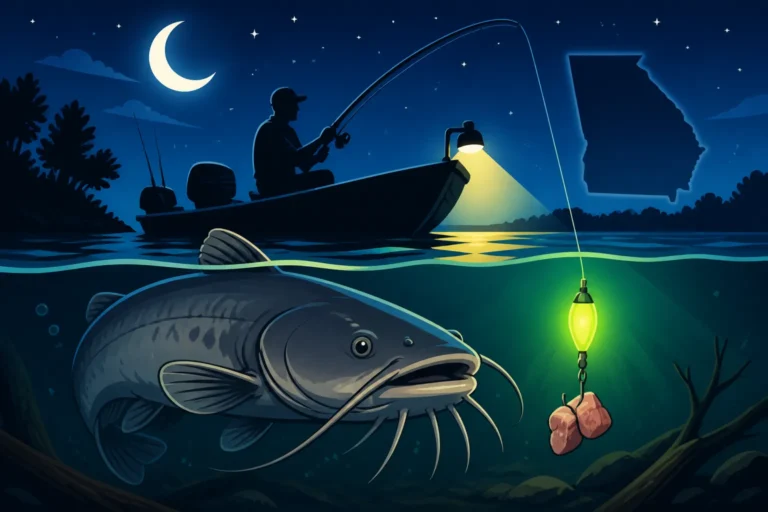
Catfish retreat to cooler deep water in the daytime heat, then move onto shallow flats, creek channels and humps after dark, which makes night trips productive.
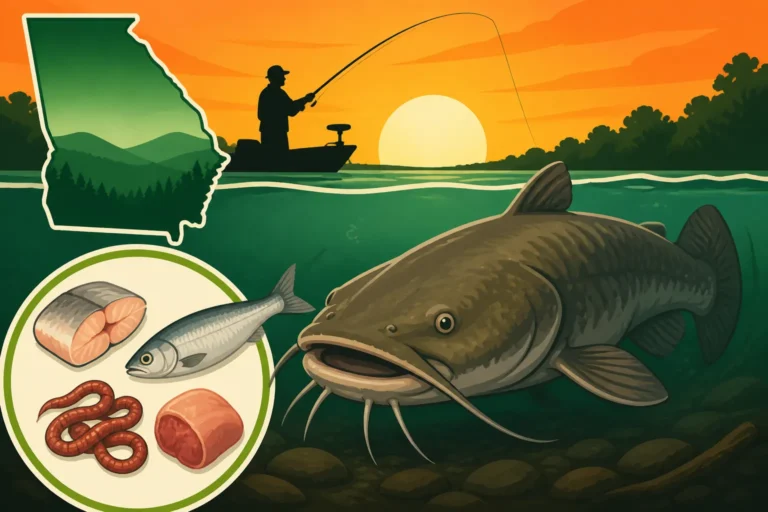
Flathead catfish biology explains why live baitfish outshine traditional cut baits for catching predators in Georgia waters.
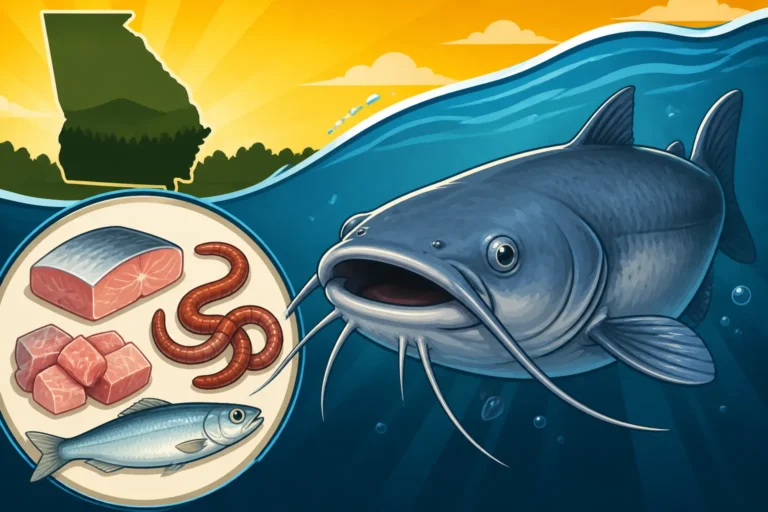
Live shad, herring, bluegill, and bream serve as top bait options for catching large blue catfish in Georgia rivers.
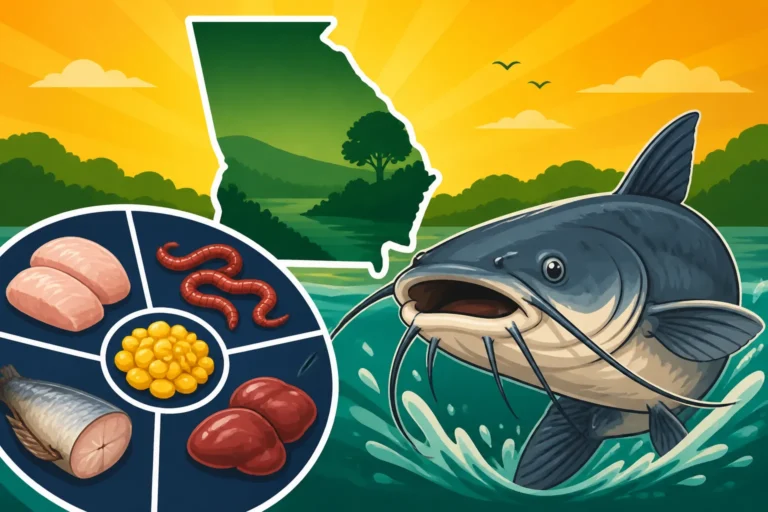
Channel catfish bait choices for Georgia waters, including cut shad and live worms, explained with scent and diet facts.
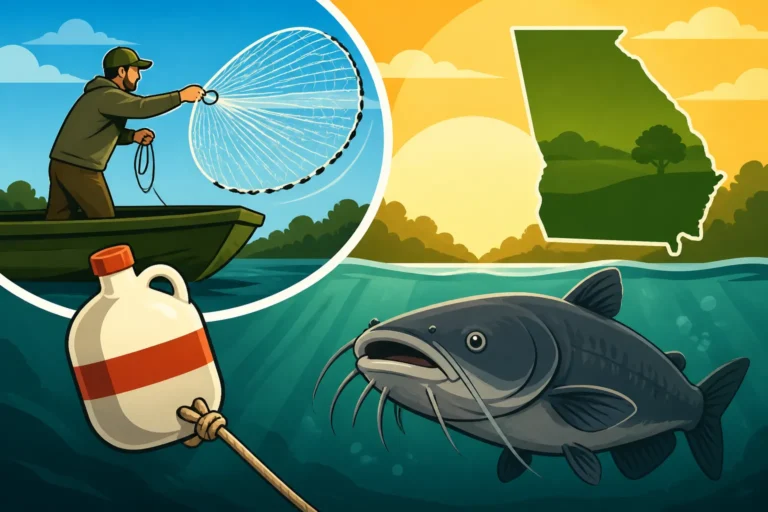
Jug fishing in Georgia uses free-floating lines to target catfish, covering wide waters to catch large fish efficiently.
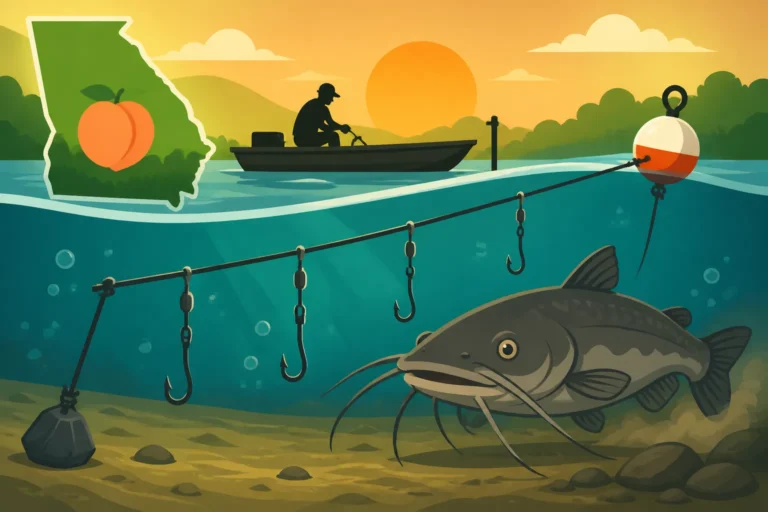
Georgia trotline regulations, including a 150-foot length limit, 50-hook maximum, proper spacing, tagging requirements, and restricted areas.
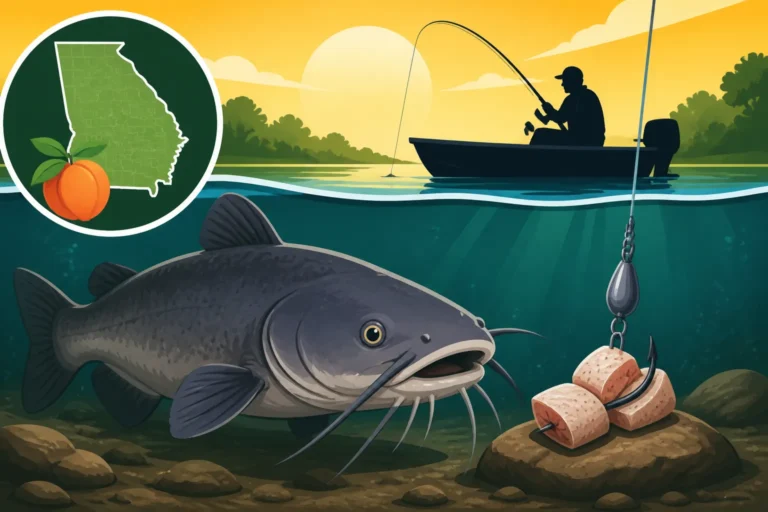
Bottom fishing techniques and catfish behavior for Georgia lakes and rivers help anglers catch channel, blue, and flathead catfish.
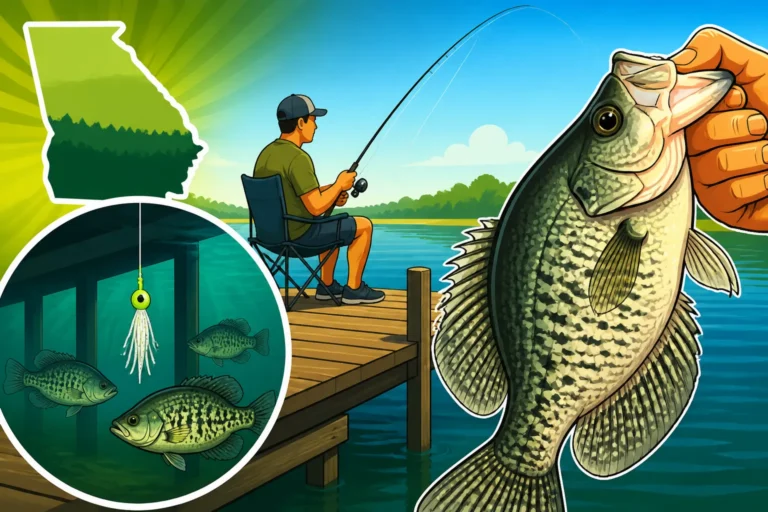
Crappie fishing from docks explains how shade, structure, and seasonal movements help anglers catch panfish without using boats.
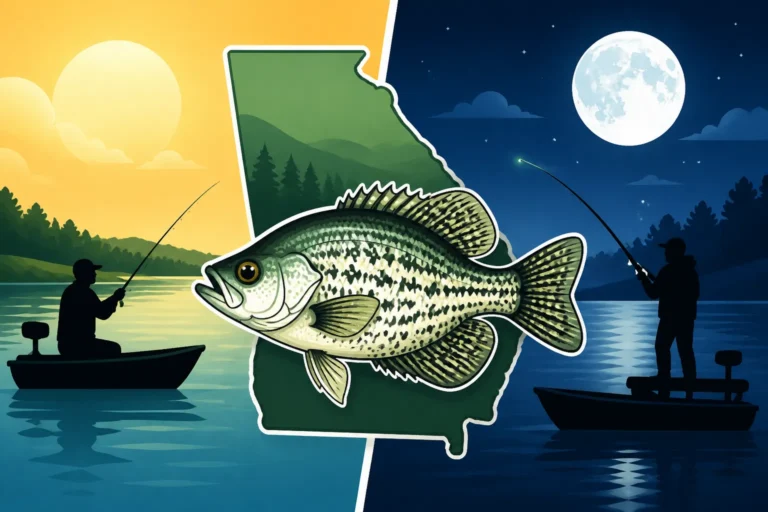
Nocturnal crappie fishing in Georgia waters depends on light sources attracting baitfish and changing seasonal predator dynamics.
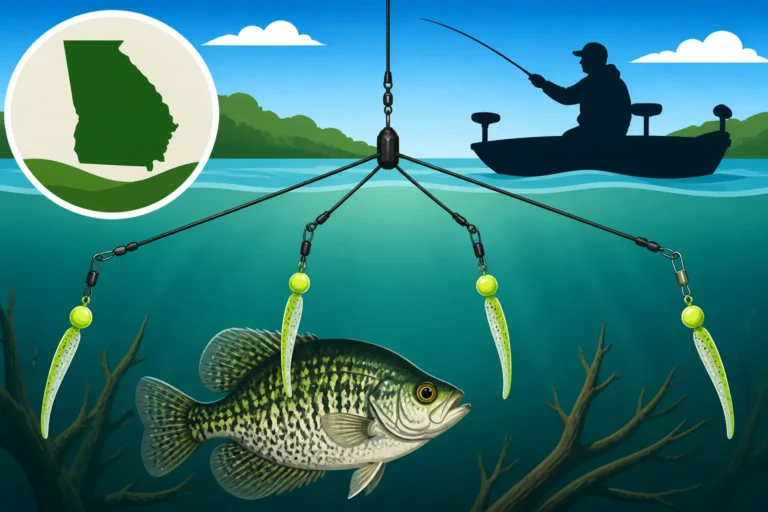
Spider rigging allows anglers to fan four to eight lines across water, catching scattered crappie at varying depths near Georgia reservoirs.