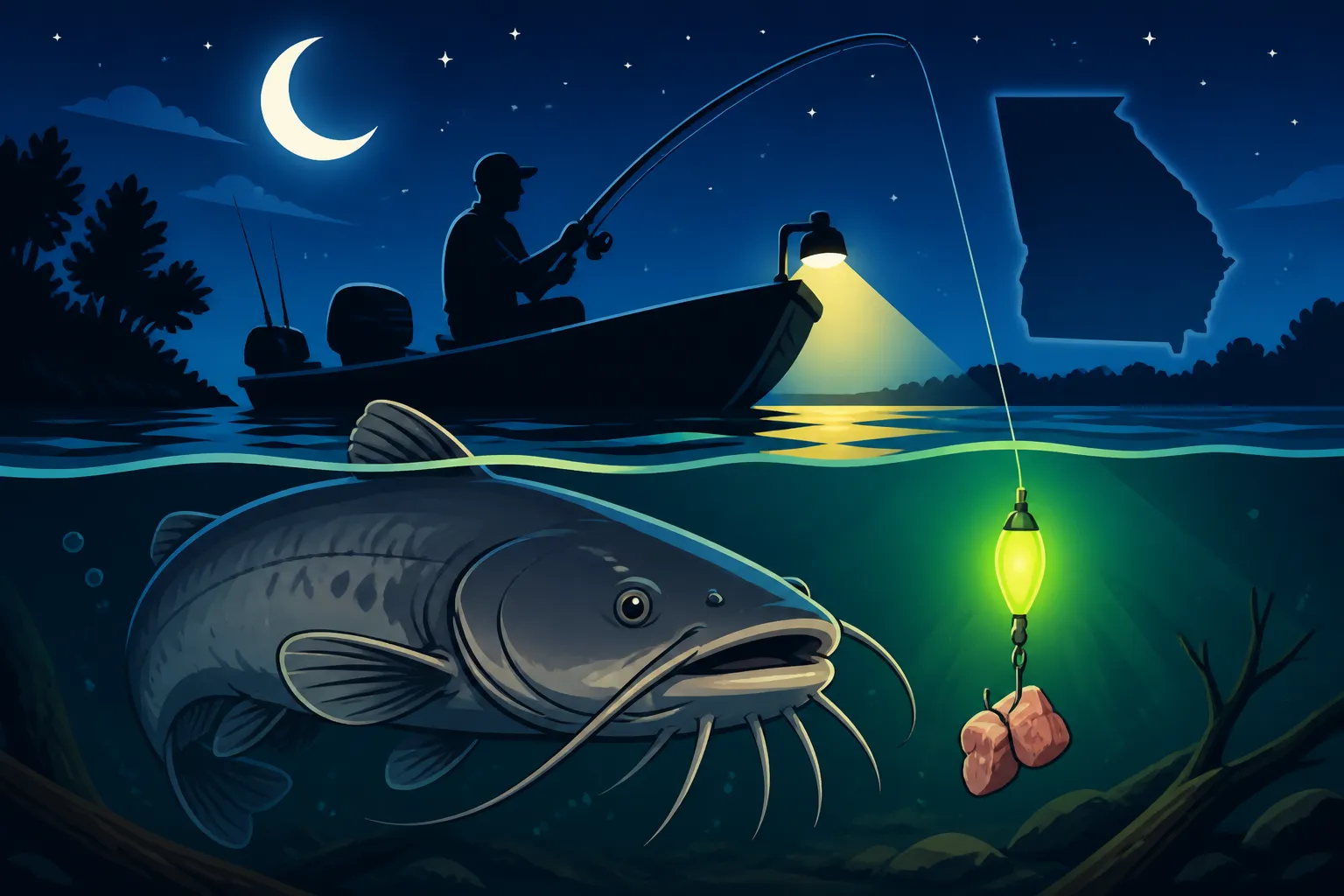
How to Catch Catfish at Night
You've been out there all day, baking in the Georgia sun, trying to land a decent catfish, and it feels like they've gone into hiding. It's a common frustration, isn't it? Those big whiskered monsters seem to vanish once the sun is high. But here's a little secret: when the sun goes down, the catfish come alive! This guide is all about helping you harness the magic of the night to fill your cooler with those hard-fighting, delicious catfish that are just waiting for the dark.
Why Catfish Become More Active After Dark in Georgia
If you've spent any time fishing Georgia's lakes and rivers, you've probably noticed that some species just seem to "turn on" after dark. Catfish are definitely among them! It's not just a coincidence; there are some very real, biological reasons why these fish become more active once the sun dips below the horizon. Understanding these factors can dramatically improve your chances of success.
Escaping the Heat and Finding Comfort
Let's face it, Georgia summers are hot. Really hot. And while us anglers can take refuge under a wide-brimmed hat or in an air-conditioned boat, fish don't have that luxury. For catfish, especially the larger ones, prolonged exposure to warmer surface waters during the day can be stressful. They'll often retreat to deeper, cooler sections of lakes and rivers, or seek out shaded areas under docks, fallen trees, or heavy cover. This makes them harder to find and entice with bait.
However, as evening approaches and the sun's intensity wanes, the water temperature begins to drop, particularly in the shallower zones. This cooling effect, even if it's just a few degrees, makes these areas much more comfortable for catfish. They'll migrate from their deep, cool daytime haunts into these shallower feeding flats, creek channels, and humps where they can actively search for food without the discomfort of the heat. It's like they've been given a green light to cruise their favorite dinner spots.
Predation and Competition in Low Light
Another significant factor in the nocturnal habits of catfish is the reduction of predation and competition. During daylight hours, catfish, especially the smaller ones, can be targets for larger predatory fish like bass or even osprey and eagles. Under the cover of darkness, these visual predators are far less effective, giving catfish a sense of security to roam more freely. This is especially true for young channel cats who might spend their days tucked away in thick cover.
Furthermore, many of the fish that compete for food with catfish, such as panfish or smaller bass, are primarily visual feeders and become less active at night. This means less competition for the catfish. When the lights go out, it's essentially a free-for-all buffet for our whiskered friends. They can confidently move into areas rich with forage, like shallow flats where baitfish congregate, or along mud lines where insects and crustaceans are active, knowing they have the upper hand. If you've ever wondered, "Do Catfish Bite Better After Dark?", the answer is a resounding yes for many situations, precisely because of these environmental shifts.
Enhanced Sensory Abilities in the Dark
Catfish aren't called "whisker fish" for nothing! Their most distinctive features, the barbels around their mouths, are packed with chemoreceptors – essentially taste buds. These aren't just for show; they are incredibly sophisticated sensory organs that allow catfish to detect even the faintest chemical cues in the water. In the absence of light, their barbels become their primary tools for locating food. They can "taste" the water, sniffing out decaying bait, distressed baitfish, or other food sources long before they see them.
Beyond their barbels, catfish also possess a highly developed lateral line system, a row of sensory pores running along their sides. This system detects vibrations and pressure changes in the water, helping them navigate and pinpoint prey in complete darkness. While many fish rely heavily on sight, catfish thrive in low-light conditions because their other senses are so acutely honed. This gives them a distinct advantage over many other species after sunset. When other fish are bedding down, catfish are just clocking in for their shift, using their specialized senses to dominate the nocturnal feeding grounds.
Essential Gear and Setup for Night Catfishing in Georgia
Getting ready for a night out on the water chasing catfish isn't just about bait and hooks; it's about being prepared for the dark. There are some specific pieces of gear and setup considerations that can make your experience not only more successful but also much safer and more comfortable.
Lighting the Way for Safety and Success
When you're fishing in the dark, good lighting is paramount. You need to see what you're doing, avoid obstacles, and keep yourself safe. A reliable headlamp is your absolute best friend. Look for one with adjustable brightness settings and, ideally, a red light option. The red light preserves your night vision better, which is crucial for seeing faint light changes or distant markers, and it's less likely to spook fish than a bright white beam. Hands-free operation is key when you're tying knots, baiting hooks, or unhooking a fish.
Beyond your personal headlamp, a portable lantern can illuminate your immediate fishing area, making tasks like rigging or organizing tackle much easier. Battery-powered LED lanterns are fantastic because they're bright, efficient, and don't get hot like older gas lanterns. For your rods, consider adding glow sticks or small LED lights to the rod tips. These allow you to easily see bites, even subtle ones, without constantly shining your headlamp on your lines. You can find a wide range of reliable lighting options on Amazon that are perfect for night fishing, from powerful headlamps to long-lasting lanterns.
The Right Rods, Reels, and Line for Big Fish
Night fishing for catfish often means targeting bigger, more aggressive fish that are confidently feeding. Your gear needs to be up to the task.
- Rods: You'll want sturdy, medium-heavy to heavy-action rods that can handle powerful runs and the weight of a decent-sized cat. A length of 7 to 9 feet is often ideal for casting heavier baits and sinkers from the bank or a boat, and for providing leverage during a fight. Many anglers prefer a rod with a softer tip to detect subtle bites but a strong backbone to set the hook and muscle in a fish.
- Reels: A robust spinning reel (size 5000-8000) or a baitcasting reel with a good, smooth drag system is essential. Catfish can pull hard, so a reliable drag prevents line breaks and ensures you can tire the fish out effectively. Make sure your reel has sufficient line capacity.
- Line: For mainline, 20-50 lb monofilament or braided line is common. Monofilament offers a bit more stretch, which can be forgiving, while braid offers incredible strength, sensitivity, and a smaller diameter for its breaking strength. If using braid, consider a monofilament or fluorocarbon leader to provide some shock absorption and make your rig less visible. Check out our guide on Best Catfish Gear for Georgia Rivers and Lakes for more specific recommendations on tackle.
Comforts and Necessities for a Night Out
Fishing through the night can be a long haul, so making yourself comfortable and prepared for anything is vital.
- Seating: A comfortable, portable fishing chair can make hours of waiting much more enjoyable. Trust me, standing for five hours when you could be sitting makes a huge difference!
- Insect Repellent: Georgia nights, especially near water, mean mosquitoes and other biting insects. Don't skimp on the bug spray! You can easily grab effective repellents on Amazon before your trip.
- Cooler: Bring a cooler packed with drinks, snacks, and ice. If you plan to keep your catch, a separate cooler with plenty of ice for fish is a must.
- First-Aid Kit: Accidents happen, especially in the dark. A basic first-aid kit with bandages, antiseptic wipes, pain relievers, and any personal medications is non-negotiable.
- Multi-tool/Knife: Indispensable for cutting line, opening packages, or various other tasks.
- Camera: Capture those nighttime trophies! Just remember to handle fish carefully and release them quickly if you're not keeping them.
- Extra Batteries: For your headlamp and any other electronic devices. Always have more than you think you'll need.
Mastering Baits and Rigs for Nocturnal Success
Once you have your gear ready, the next step is choosing the right bait and rigging it effectively. Catfish are primarily scent-driven predators, especially at night, so selecting baits with a strong aroma is crucial.
Top Night Catfish Baits with Irresistible Scent
The key to night fishing for catfish is to offer something they can easily detect in the dark using their incredible sense of smell. Forget delicate presentations; go for powerful, pungent, and persistent aromas.
- Cut Bait: This is arguably the king of catfish baits, especially for larger blue and flathead catfish. Freshly cut pieces of oily baitfish like shad, herring, or even bream (where legal and properly sized) release a strong scent trail that catfish can follow from a distance. The oilier the fish, the better. You can use strips of fillet, chunks with skin, or even whole baitfish if you're targeting truly monster cats. The scent disperses well in the water, attracting fish quickly.
- Chicken Liver: A classic for a reason! Chicken liver is inexpensive, readily available, and incredibly stinky. It breaks down fairly quickly in the water, creating a powerful scent cloud. The main challenge is keeping it on the hook, as it's very soft. Some anglers let it "toughen up" in the sun for a bit or use special bait holders. It's particularly effective for channel catfish.
- Worms: While not as potent as cut bait for attracting big cats from afar, a juicy wad of nightcrawlers can be very effective, especially for channel catfish and smaller flatheads. They offer both scent and movement. Redworms can also work well for smaller panfish, which might indirectly attract catfish.
- Prepared "Stink" Baits: There's a huge variety of commercially prepared baits designed specifically for catfish. These range from solid dip baits to punch baits and dough baits, all formulated with powerful attractants. They are often convenient to use and mess-free compared to some natural baits. For specific recommendations, check out our detailed guides like Best Bait for Channel Catfish, Best Bait for Blue Catfish, and Best Bait for Flathead Catfish.
Effective Rigging for Night Fishing
Simplicity and strength are key when rigging for night catfish. You'll likely be dealing with heavier weights, stronger currents, and larger fish in the dark, so your knots and components need to be robust.
- Slip-Sinker Rig (Carolina Rig): This is a go-to for many catfish anglers. It consists of an egg sinker (or other slip sinker) on the main line, followed by a bead (to protect the knot), a barrel swivel, and then a leader (12-24 inches) tied to a strong circle hook. The slip sinker allows the line to move freely through it, so a biting fish doesn't feel immediate resistance from the weight, which can lead to more solid hookups. This is a primary rig we discuss in our How to Rig a Slip Sinker for Catfish article.
- Santee Cooper Rig: A variation of the slip-sinker rig, this setup incorporates a small float (like a peg float or cigar float) on the leader, just above the hook. The float lifts your bait off the bottom, presenting it slightly higher in the water column and preventing it from getting buried in muck or weeds. This can be particularly effective when catfish are cruising just above the bottom.
- Three-Way Swivel Rig: This rig uses a three-way swivel, with one eye tied to your mainline, another to a short leader with a bell sinker, and the third to a longer leader with your hook and bait. It's excellent for fishing in current as it helps keep your bait relatively stationary while allowing the sinker to tumble along the bottom if needed. The downside is it creates more snags in rocky or brushy areas.
For hooks, consider sturdy, sharp circle hooks. They are fantastic for catfishing because they typically hook the fish in the corner of the mouth, leading to fewer gut-hooked fish and making release easier if you choose to. The size will depend on your target species and bait, but sizes from 5/0 to 10/0 are common.
Strategic Techniques for Night Catfishing in Georgia Waters
Catching catfish at night isn't just about showing up with a smelly bait. It requires a strategic approach, knowing where to cast, how to wait, and always prioritizing safety.
Scouting Prime Nighttime Catfish Locations
The best night fishing spots for catfish are often the same areas they visit during the day, but with a slight twist in timing and depth. They're looking for easy meals, and after dark, they're more confident moving into shallower water.
- River Channels and Creek Mouths: In larger rivers like the Altamaha River or Flint River, deep river channels and the mouths of feeder creeks are prime real estate. Catfish will often stage in the deeper parts of these channels during the day and then move up into the shallower creek mouths at night to feed on baitfish, insects, and crustaceans washing in. Look for bends in the river or sudden drop-offs.
- Humps, Points, and Ledges: In Georgia's big reservoirs like Lake Sinclair or Lake Oconee, underwater humps, points extending into the lake, and sharp ledges are excellent targets. Catfish will use these structures as highways, moving from deeper water onto shallower feeding flats or cruising along the edges. If there's submerged timber or rock piles on these features, even better. These structures offer cover and ambush points.
- Flats Adjacent to Deep Water: Shallow flats, especially those with some weed growth or shell beds, can be goldmines at night. Catfish will push up onto these flats under the cover of darkness to scour for food. Position yourself so you can cast onto the flat but also have lines in the deeper water adjacent to it, covering both their travel lanes and feeding zones.
- Public Fishing Areas (PFAs) and State Parks: Many of Georgia's Public Fishing Areas and State Parks offer excellent bank access and are regularly stocked, providing great opportunities for catching channel cats, even after dark. These spots often have clearer banks and amenities that make night fishing more accessible. To find some great places, check out our guide on Best Night Fishing Spots in Georgia.
Patience, Persistence, and Multiple Lines
Catfishing, especially at night, is often a waiting game. It's not usually about actively retrieving lures, but rather about presenting your bait in the right spot and giving the fish time to find it.
- Set Multiple Rods: If legal in your area, use several rods with different baits and at varying depths or distances from shore. This increases your chances of intersecting a cruising catfish and helps you determine what they're keying in on that particular night. Make sure your rods are securely set in rod holders, as a powerful catfish strike can easily pull an unattended rod into the water.
- Give It Time: Don't be too quick to reel in and recast. Catfish move around, and it can take some time for them to pick up the scent trail of your bait. Once your bait is out there, give it at least 20-30 minutes, or even longer, before checking or moving it, unless you're experiencing a lot of snags.
- Observe Your Rod Tips: With your glow sticks or rod tip lights, keep a keen eye on your lines. Catfish bites can range from a subtle tap-tap-tap to a rod-bending, drag-screaming run. Be ready to grab the rod and set the hook when you see consistent action. This is where those heavy-duty rod holders truly shine.
Table: Popular Night Catfish Baits and Their Best Uses
| Bait Type | Key Characteristics | Best For | Pros | Cons |
|---|---|---|---|---|
| Cut Bait | Oily, strong scent, natural fish appearance | Blue, Flathead Catfish | Powerful scent trail, attracts large fish | Can be messy, needs refrigeration |
| Chicken Liver | Very pungent, soft texture | Channel Catfish | Highly effective, inexpensive, readily available | Falls off hook easily |
| Nightcrawlers | Live movement, subtle scent | Channel Catfish, smaller | Natural, appeals to various fish | Less effective for large cats |
| Prepared Baits | Formulated scents, various textures | Channel Catfish | Easy to use, consistent performance, less messy | Can be expensive, not for all species |
| Shad Guts/Heads | Extremely potent, greasy, durable | Large Blue/Flathead Cats | Maximum scent, very enticing for trophy fish | Very messy, strong odor on hands/gear |
Safety First When Fishing After Dark
Fishing at night carries inherent risks that daytime fishing doesn't. Always prioritize safety for yourself and anyone else with you.
- Tell Someone Your Plans: Always let a friend or family member know where you're going, when you expect to be back, and who you're with.
- Stay Aware of Your Surroundings: It's easy to trip over roots, rocks, or gear in the dark. Keep your area clear, and periodically scan your surroundings with your headlamp to check for wildlife or unexpected hazards.
- Boating Safety: If you're fishing from a boat, ensure all navigation lights are working and on. Have all required safety gear onboard, including enough Coast Guard-approved life jackets for everyone, a whistle, a fire extinguisher, and a first-aid kit. Consider adding a waterproof VHF radio or satellite messenger for emergencies, as cell service can be spotty in some remote Georgia fishing spots. Our guide on Safety Gear Checklist for Georgia Boaters offers a great overview.
- Watch for Weather Changes: Georgia weather can be unpredictable. A clear evening can quickly turn into a stormy night. Keep an eye on the forecast and be prepared to pack up if conditions worsen.
Catching catfish at night can be an incredibly rewarding experience, offering not just the thrill of the catch but also a unique, peaceful connection with nature under the stars. By understanding their nocturnal habits, preparing with the right gear, and employing smart techniques, you'll be well on your way to consistent success on Georgia's waters after dark.
Disclaimer
This article is for general informational purposes only and does not constitute professional advice. Laws, prices and regulations vary by location and change over time. Consult a qualified professional for guidance on your specific situation.