Best Crankbait for Largemouth Bass
Walking into any tackle shop here in Georgia, it's easy to feel a bit lost staring at the overwhelming array of crankbaits on the wall. Each one promises to be the "secret weapon," but how do you know which one will actually tempt a big largemouth bass from its hiding spot in our diverse lakes and rivers? You're not alone in that frustration! This guide is designed to cut through the noise, helping you understand the different types of crankbaits and how to select the absolute best ones for consistently catching largemouth bass right here in Georgia.
Decoding the Crankbait Arsenal: Types and Their Actions for Largemouth
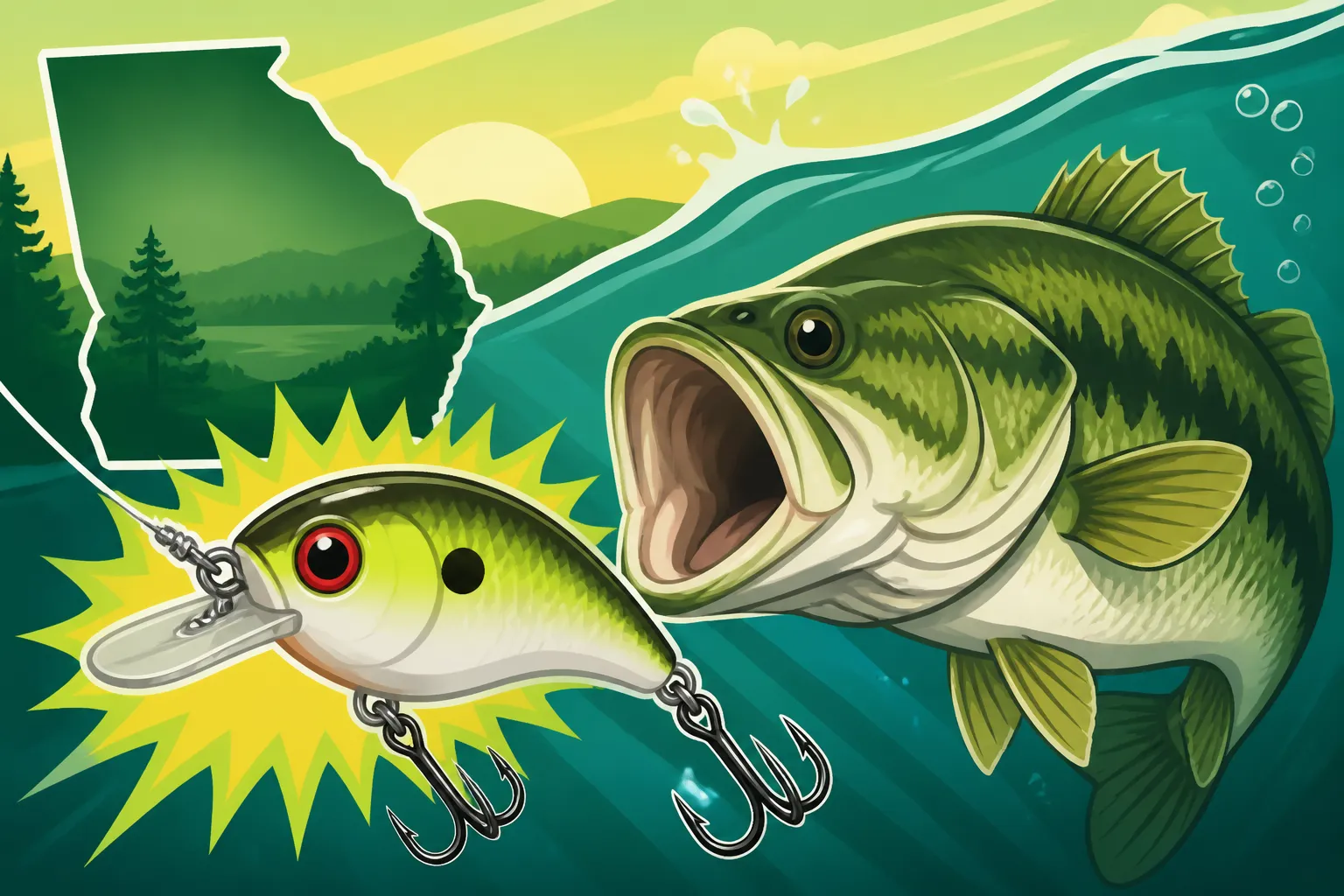
Before we can pick the "best" crankbait, we need to understand what makes these lures so effective and how they're designed to mimic natural forage. Crankbaits are essentially hard-bodied fishing lures that dive to a certain depth when retrieved, wiggling and wobbling to attract predatory fish like largemouth bass. They come in a bewildering variety of shapes, sizes, colors, and, most importantly, diving capabilities and actions.
Understanding the Bill: Dive Depth and Action
The most defining feature of any crankbait is its "bill" or "lip." This small, often transparent piece of plastic at the front dictates everything from how deep the lure will dive to how it moves through the water. A longer, wider bill will make the crankbait dive deeper and often give it a wider, more erratic wobble. Conversely, a shorter, smaller bill means a shallower dive and usually a tighter, more subtle wiggle.
Think about it this way: if you're fishing a shallow flat where bass are cruising just a few feet under the surface, a crankbait designed to dive 15 feet will be completely ineffective. It'll just dig into the bottom, collect weeds, and quickly frustrate you. That's why understanding this fundamental principle is so critical. You need to match the dive depth of your crankbait to the depth where the bass are holding. This is often dictated by factors like water temperature, time of year, and available cover, which we also explore in our guide to How Water Temperature Changes Affect Fish Behavior.
Key Crankbait Body Styles and Their Wobbles
Beyond the bill, the body shape also plays a huge role in a crankbait's action. Generally, you'll encounter a few main styles, each with its own niche in the bass fishing world.
- Shallow-Diving Crankbaits: These usually have a short, blunt bill and are designed to run just a few feet deep, or even skim the surface. They're fantastic for fishing over submerged grass beds, stump fields, or shallow rocky banks. Their action is often a tight wiggle, mimicking a fleeing baitfish in the shallows.
- Medium-Diving Crankbaits: With a slightly longer and more angled bill, these are your versatile workhorses, typically diving anywhere from 5 to 12 feet. They can have a moderate wobble or a wider, more aggressive thumping action. These are great for fishing along channel swings, offshore humps, or deeper points on Georgia's larger reservoirs like Lake Lanier.
- Deep-Diving Crankbaits: These are easily identifiable by their very long, often steeply angled bills. Designed to reach depths of 12 feet or more, some can even hit 25+ feet! They usually have a very wide, aggressive wobble that displaces a lot of water, which can be crucial for attracting bass from greater depths. You'll often use these to target bass holding on deep ledges, brush piles, or main lake points.
- Lipless Crankbaits: Unique in that they lack an external bill, these lures sink rapidly and produce a tight, high-frequency vibration on the retrieve thanks to internal rattles. They're incredibly versatile for covering water quickly, fishing various depths, and are especially effective in cooler water when bass are lethargic. They're also perfect for ripping through grass or yo-yoing near cover.
- Squarebill Crankbaits: A sub-category of shallow divers, distinguished by their square-shaped bill. This design allows them to deflect off cover like stumps, rocks, and laydowns without snagging, often triggering a reaction strike from nearby bass. They're a favorite for targeting fish in dense, shallow cover.
Understanding these distinctions is the first step in building a truly effective tackle box for largemouth bass here in Georgia.
Reading the Water: Choosing Crankbaits for Georgia's Diverse Habitats
Georgia's fishing landscape is incredibly varied, from muddy, stump-filled lowland reservoirs to clear, rocky mountain lakes and winding rivers. What works perfectly on one body of water might be a total dud on another. The "best" crankbait isn't a single lure; it's the right lure for the right conditions.
Matching Crankbaits to Water Clarity and Color
Water clarity is one of the most significant factors in crankbait selection. Bass are visual predators, but their vision, like ours, is affected by how clear the water is.
- Clear Water: In our clearer mountain lakes or reservoirs like Lake Burton, bass rely heavily on sight. You'll want crankbaits with more natural patterns, subtle actions, and muted colors that mimic natural baitfish like shad or bluegill. Think about clearwater crawfish patterns or translucent greens and browns. The goal is to be realistic, not to alarm the fish. Our guide to How to Catch Bass on a Cloudy Day also touches on visibility and how it impacts lure choice.
- Stained or Slightly Murky Water: This is where many of Georgia's larger reservoirs, such as Lake Hartwell or Lake Oconee, often fall. Here, bass still use sight but also rely on their lateral line to detect vibrations. Crankbaits with more flash, a louder rattle, or a wider wobble can be more effective. Colors can be a bit brighter, like chartreuse, orange, or reds, especially if the water has a tea-stained tint.
- Muddy or Extremely Stained Water: In heavily muddied rivers or reservoirs after a big rain, visibility is minimal. Bass are now relying almost entirely on their lateral line to feel vibrations and their sense of smell. Forget natural colors; go for high-contrast, bold patterns. Chartreuse, black and blue, or bright orange are excellent choices. You'll also want crankbaits with a very aggressive, wide wobble and loud rattles to create maximum disturbance in the water. Lipless crankbaits, with their intense vibration, really shine in these conditions.
Adapting to Forage and Season
Another crucial aspect is mimicking the local forage. Bass are opportunistic, but they primarily feed on what's abundant.
- Shad Imitations: Many of our Georgia lakes, like Lake Seminole and Lake Sinclair, have abundant populations of threadfin and gizzard shad. In these waters, crankbaits that mimic the size, shape, and flash of shad in silver, white, or light blue patterns are often deadly. This is particularly true during spring and fall when shad are schooling up in open water or moving to shallower creeks.
- Crawfish Patterns: Crawfish are a staple for largemouth bass in rocky areas or on hard bottoms throughout Georgia. Look for crankbaits in browns, oranges, and reds, especially those with a wide, erratic wobble that simulates a crawfish scuttling along the bottom. Squarebills are particularly good for this, as they can "crawl" over rocks and stumps.
- Bluegill/Bream Patterns: In smaller ponds or areas of larger lakes with lots of shallow cover, bluegill are a common meal. Crankbaits with green, yellow, and orange hues, mimicking the panfish profile, can be highly effective. These are often shallow to medium divers. For more on these smaller species, see our Bluegill Fishing: A Beginner's Guide for Georgia Kids.
The season also plays a huge role. During the Spring Bass Fishing Patterns on Georgia's Reservoirs when bass are moving shallow to spawn, shallow-diving crankbaits and squarebills are kings. In the heat of summer, when bass often go deep, deep-diving crankbaits become essential. Fall often sees bass chasing shad in open water, making medium-to-deep divers and lipless crankbaits excellent choices.
Top Crankbait Picks for Georgia Largemouth: Tried and True Styles
Alright, now that we've covered the "why," let's get into the "what." While specific models are constantly being introduced, some crankbait styles and characteristics consistently prove their worth for Georgia largemouth. You can find many of these staples at retailers like Bass Pro Shops or online through Amazon, often with excellent user reviews specific to southern fishing conditions.
1. Squarebill Crankbaits
- Why they're great for Georgia: Georgia is loaded with shallow cover – laydowns, stumps, riprap, docks, and rocky banks. Squarebills are designed to be fished aggressively through this cover without snagging. Their square bill deflects off obstacles, creating an erratic, triggering action that bass can't resist.
- Ideal conditions: Shallow water (0-8 feet), especially around wood, rocks, and man-made structures. Excellent in slightly stained to clear water. They are a go-to during the pre-spawn and post-spawn periods, but can work year-round when bass are shallow.
- Key characteristics: Short, square-shaped bill; moderate to wide wobble. Look for models in 1.5 to 2.5 sizes.
- Colors to consider: Crawfish patterns (reds, oranges, browns) for rocky areas; shad patterns (whites, silvers, chartreuse) for open banks; natural greens and blues for clearer water.
2. Lipless Crankbaits
- Why they're great for Georgia: Lipless crankbaits are incredible search baits, allowing you to cover vast amounts of water quickly. Their tight, high-frequency vibration and internal rattles are fantastic for attracting bass, especially when they're not actively chasing or when visibility is low. They are also excellent for "ripping" through submerged grass beds, a common cover on many Georgia lakes.
- Ideal conditions: All depths, from shallow flats to deep water (they sink, so you control the depth). Especially effective in stained to muddy water, windy conditions, and during cooler water temperatures (winter, early spring, late fall). Also great for fishing around vertical cover like bridge pilings.
- Key characteristics: No external bill; internal rattles; fast sink rate; tight, vibrating action on retrieve.
- Colors to consider: Chrome with blue or black back for shad imitations; gold; bright chartreuse for muddy water; crawfish patterns.
3. Medium-Diving Crankbaits (Rounded Bill)
- Why they're great for Georgia: These are your versatile utility players. Many Georgia bass will hold in that 8-15 foot range, especially during the transition seasons. A good medium diver can fish ledges, humps, points, and channel swings effectively, mimicking baitfish moving through these zones.
- Ideal conditions: Mid-depths (5-12 feet), around points, humps, ledges, and transition areas. Good for a wide range of water clarities, depending on color choice. Excellent during spring, summer, and fall.
- Key characteristics: Medium-length, rounded bill; moderate to wide wobble.
- Colors to consider: Shad patterns (whites, silvers, light blues); natural crawfish patterns; chartreuse/blue or chartreuse/black for stained water. Our guide on Best Lures for Georgia Largemouth Bass also features some excellent options that fall into this category.
4. Deep-Diving Crankbaits
- Why they're great for Georgia: When the heat of summer pushes bass deep, or during the cooler months when they school up on offshore structure, deep divers are indispensable. They get down to where the big fish live and their aggressive wobble can call them out of dense cover.
- Ideal conditions: Deep water (15-25+ feet), fishing main lake ledges, deep points, offshore humps, and brush piles. Best in clear to slightly stained water. Primarily a summer and winter bait.
- Key characteristics: Long, often steeply angled bill; wide, aggressive wobble; typically larger body size.
- Colors to consider: Shad patterns (white, chrome, translucent blues/greens); dark greens and browns for deep water baitfish or crawfish.
Here’s a quick overview of these top crankbait styles:
| Crankbait Style | Bill Type | Typical Dive Depth (Feet) | Primary Action | Best for Conditions | Common Forage Mimicked |
|---|---|---|---|---|---|
| Squarebill | Square | 0-8 | Erratic Deflection | Shallow cover (wood, rocks), stained to clear water | Crawfish, small baitfish |
| Lipless | None | All (variable) | Tight Vibration, Rattle | Covering water, grass, wind, stained/muddy, cool water | Shad, panfish |
| Medium Diver | Round/Medium | 5-12 | Moderate Wobble | Mid-depth structure (points, humps), varied clarity | Shad, crawfish |
| Deep Diver | Long/Angled | 12-25+ | Wide, Aggressive Wobble | Deep ledges, offshore structure, clear to stained water | Shad, larger baitfish |
Beyond the Cast: Mastering Crankbait Retrieval Techniques
Having the "best" crankbait in your tackle box is only half the battle; knowing how to work it effectively is the other. Largemouth bass often react to specific presentations, and a crankbait offers a lot of versatility in how you retrieve it.
The Standard Steady Retrieve: Covering Water
The simplest, and often most effective, way to fish a crankbait is with a steady retrieve. Cast it out, reel it down to its maximum depth, and then maintain a consistent retrieve speed. This allows the crankbait to do what it's designed to do – wiggle and wobble, mimicking a swimming baitfish. This technique is fantastic for covering open water, searching for active fish, or when bass are schooled up and aggressively feeding. Vary your retrieve speed slightly until you find what the fish are responding to. Sometimes a slow, methodical crawl is key, while other times a fast burn is what gets the bite.
The "Deflection" Technique: Triggering Reaction Strikes
This is arguably the most critical technique for squarebill crankbaits and is highly effective in Georgia's cover-rich environments. Instead of avoiding obstacles, you actively seek them out. Cast your squarebill so it will hit a stump, rock, or log. When the lure makes contact, it will "deflect" or "kick" off the object in an erratic, unpredictable manner. This sudden change in direction often triggers an instinctive reaction strike from a bass that was otherwise uninterested. It mimics a fleeing baitfish that's just bumped into something, or a crawfish scuttling away. Pause briefly after the deflection before resuming your retrieve to give the bass a chance to grab it.
The Stop-and-Go and Rip-Pause: Creating Erratic Movement
Bass, like many predators, are often triggered by erratic movements or pauses. A simple stop-and-go retrieve can be incredibly effective, especially with lipless crankbaits or medium divers. Cast your lure, retrieve it a few feet, then pause completely for a second or two, letting it float or sink slightly. Then, continue your retrieve. This mimics a wounded baitfish struggling or pausing, an easy target for a hungry bass.
For lipless crankbaits, the "rip-pause" is a fantastic technique. Cast it out, let it sink to the desired depth, then aggressively "rip" your rod tip upwards a foot or two, causing the lure to dart and vibrate violently. Immediately let the lure fall back on a semi-slack line. Many strikes happen on that fall. This is especially effective for bass hiding in submerged grass or when they're less active in cooler water.
Trolling Crankbaits: Covering Large Areas
While often associated with saltwater or striper fishing, trolling crankbaits can be highly effective for largemouth bass on Georgia's larger reservoirs, particularly when fish are scattered or holding at specific depths over vast areas. This involves slowly motoring your boat while letting out long lines with crankbaits behind you. By varying line length, boat speed, and crankbait dive depth, you can effectively present lures to bass holding at different levels in the water column. This strategy is particularly useful when targeting fish on expansive flats or along channel ledges where casting might not cover enough ground. Always check local regulations, as some areas may have restrictions on trolling.
Mastering these techniques, combined with a solid understanding of crankbait types and how they match Georgia's diverse waters, will undoubtedly boost your largemouth bass catch rates. Remember, the goal isn't just to throw a lure; it's to tell a story that a hungry bass wants to bite.
Disclaimer
This article is for general informational purposes only and does not constitute professional advice. Laws, prices and regulations vary by location and change over time. Consult a qualified professional for guidance on your specific situation.