Best Crappie Fishing Spots on Lake Blackshear, Georgia
It can be incredibly frustrating to hit a big lake like Blackshear, full of potential, only to spend hours searching for those elusive crappie schools. Many anglers find themselves guessing where to start, leading to wasted time and fewer fish in the cooler. This guide is here to cut through that frustration, offering you a deep dive into the best crappie fishing spots on Lake Blackshear, Georgia, along with the seasonal patterns and techniques that will help you fill your livewell.
Understanding Lake Blackshear's Crappie Hotbed Status
Lake Blackshear isn't just another body of water; it's a crappie paradise, particularly known for its strong populations of both black and white crappie. Its unique characteristics make it an ideal habitat for these popular panfish, offering them everything they need from spawning grounds to year-round foraging opportunities.
The Lake's Unique Layout and Habitat
Stretching over 8,700 acres, Lake Blackshear is a reservoir on the Flint River, known for its cypress-lined shores, numerous coves, and a significant amount of standing timber. These features create a labyrinth of structure that crappie absolutely adore. Unlike some clear-water lakes, Blackshear often has stained to murky water, which provides excellent camouflage for crappie and keeps them less wary of anglers. The lake's average depth varies, but it has plenty of deeper channels, especially along the original Flint River bed, which are crucial for crappie during colder months and warmer summer periods. The abundance of baitfish, such as threadfin and gizzard shad, also contributes to the healthy and robust crappie population found here.
Why Crappie Thrive in Blackshear
The combination of submerged timber, brush piles, cypress trees, and a rich forage base creates a perfect environment for crappie to feed, hide, and reproduce. Blackshear’s nutrient-rich waters support a thriving ecosystem, leading to a strong crappie population that can grow to impressive sizes. Many anglers report catching crappie over a pound regularly, with two-pound slabs not uncommon. This makes it a prime destination for anyone looking to catch quality crappie. The lake also benefits from management efforts by the Georgia Department of Natural Resources, which helps maintain the fishery's health. For those eager to explore other top panfish destinations, understanding the Best Crappie Lakes in Georgia can provide a broader perspective on the state's potential.
Pinpointing the Best Crappie Fishing Spots on Lake Blackshear
Finding crappie on a large lake is all about understanding their preferences for structure and forage. Lake Blackshear offers a variety of such locations, from the mouths of creeks to deep river channels. Knowing where to focus your efforts will drastically increase your success rate.
Crappie Havens in Creek Arms and Tributaries
During much of the year, and especially in spring and fall, the creek arms and their tributaries are absolute magnets for crappie. These areas offer shallower, warmer water in spring, vital for spawning, and plenty of cover from predators.
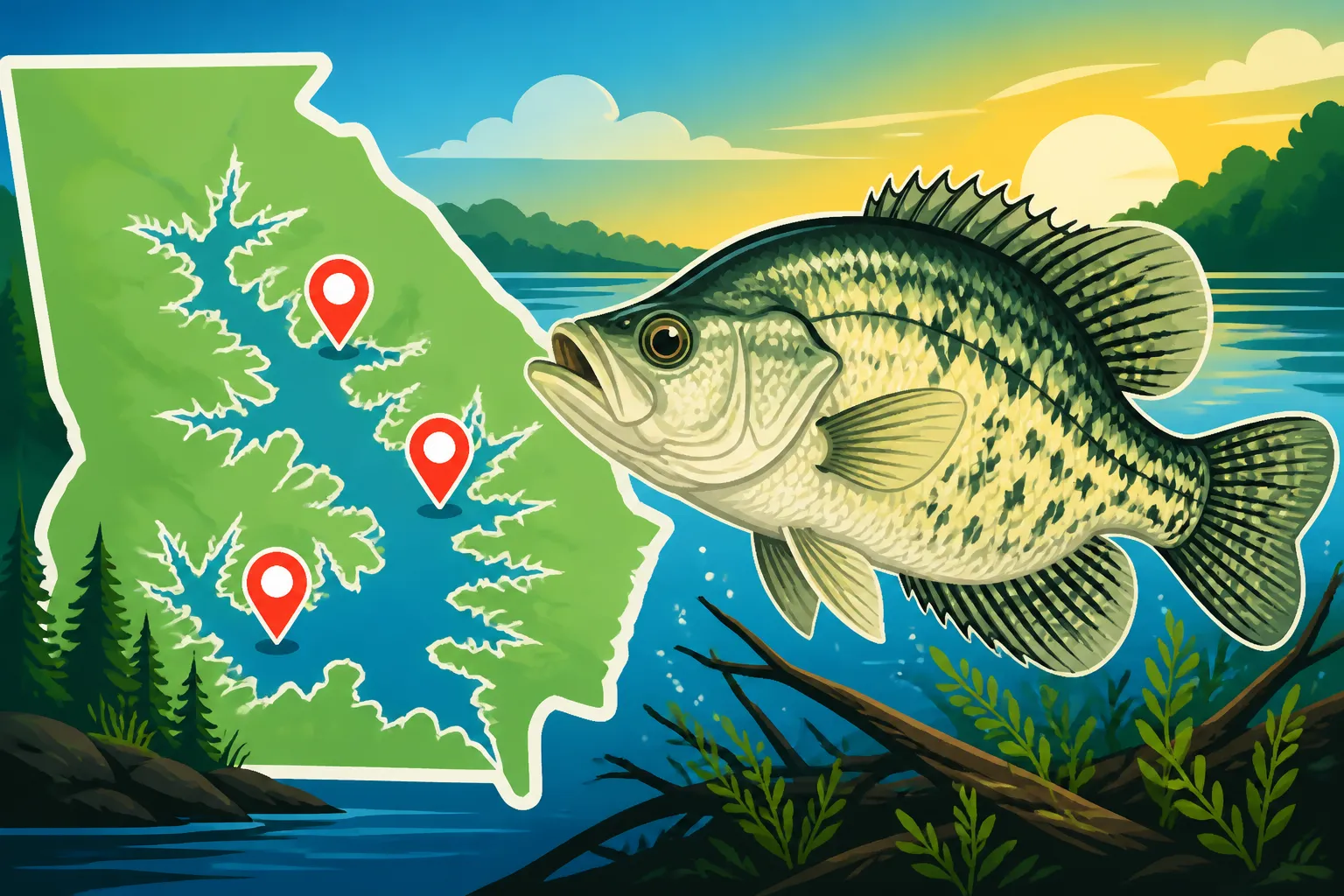
- Spring Creek: Without a doubt, Spring Creek is one of the most famous crappie hotspots on Lake Blackshear. Its extensive network of coves, fallen timber, and underwater brush piles makes it an ideal location for crappie, especially when they move shallow to spawn. Anglers often find success working jigs and minnows around the flooded willows and cypress trees lining the banks of this creek arm. The calmer waters here also make it a great place to refine your How to Jig for Crappie technique, as the current is less of a factor.
- Gum Creek: Located on the eastern side of the lake, Gum Creek offers similar productive habitat to Spring Creek. It has numerous fingers and pockets with plenty of submerged structure and brush. During the cooler months, the crappie here will often retreat to deeper pockets within the creek, making it a reliable spot even when the main lake is slow. The mouths of these creeks are also excellent transition areas where crappie stage before moving further in or out.
- Cedar Creek: Further south, Cedar Creek provides another excellent crappie fishery. It tends to hold crappie in similar structures to Spring and Gum creeks, particularly around any standing or fallen timber. This area can be particularly good in the late fall as crappie begin to school up before the winter deep-water patterns set in. When planning your trip, consider checking out local fishing reports, which can often be found through platforms like FishingBooker, which sometimes list guides who specialize in these specific creek systems.
Finding Crappie in Submerged Structure and Open Water
Crappie are masters of hiding, and Lake Blackshear provides ample opportunities for them to do so. Beyond the creeks, the main body of the lake holds significant crappie populations, especially around specific types of submerged structure.
- The Old Flint River Channel: The original river channel that snakes through Lake Blackshear is a highway for crappie, especially when they seek deeper water. Look for drops-offs, ledges, and humps along this channel. Crappie will often suspend over or near these features, especially during summer and winter. Using a good fish finder is critical here to locate schools of baitfish and the crappie lurking nearby.
- Bridge Pilings: The bridges crossing Lake Blackshear, particularly the Georgia Highway 30 bridge, offer excellent vertical structure that attracts crappie. The pilings themselves provide shade, current breaks, and a surface for algae and small invertebrates, which in turn attract baitfish. Crappie will stack up around these pilings, often at varying depths depending on the time of day and water temperature.
- Man-Made Brush Piles and Fish Attractors: Many local anglers and the Georgia DNR have sunk brush piles throughout the lake to create fish habitat. These are often secret spots passed down through generations of local anglers. However, if you have good electronics, you can often locate them. These piles concentrate crappie year-round, offering a consistent spot once found. If you're looking for an experienced hand to show you these honey holes, booking a trip through FishingBooker with a local Lake Blackshear crappie guide can be an invaluable investment.
Shoreline and Public Access Spots for Crappie
Not everyone has a boat, and thankfully, Lake Blackshear still offers some excellent opportunities for bank anglers to catch crappie. While boat access opens up more of the lake, diligent shore fishing can still yield great results.
- Georgia Veterans State Park: This park offers excellent public access to Lake Blackshear, including piers and shoreline areas that can be highly productive for crappie. The piers extend into deeper water, allowing anglers to reach areas that might typically require a boat. Look for crappie around any structure near these piers, such as submerged brush or weed lines. The park also has other amenities, making it a great choice for a family fishing outing. For other accessible spots, you might want to explore Lake Blackshear Boat Ramps and Shore Access.
- Lake Blackshear Resort and Golf Club Area: While primarily a resort, areas around the club and public access points nearby often have shoreline that provides access to crappie. Look for small coves or areas with fallen timber that crappie will use for cover. Early mornings and late evenings tend to be the most productive from the bank, as crappie move closer to shore to feed.
- Canals and Ditches: Some of the smaller canals and drainage ditches that feed into Lake Blackshear can hold crappie, especially during the spring spawn when they push into shallower, sheltered waters. These spots might require a bit more exploring but can offer fantastic, less-pressured fishing. Always be mindful of private property when exploring these smaller waterways.
Cracking the Code: Seasonal Crappie Patterns on Lake Blackshear
Crappie are creatures of habit, and their behavior changes dramatically with the seasons. Understanding these patterns on Lake Blackshear is key to consistently finding them.
Spring Frenzy: Spawning and Pre-Spawn Crappie
Spring is arguably the most exciting time for crappie fishing on Lake Blackshear. As water temperatures begin to rise into the 50s and 60s Fahrenheit, crappie move from their deeper wintering grounds to the shallower, warmer waters of the creeks and coves.
- Pre-Spawn Movement: In early spring, when water temperatures are in the low to mid-50s, crappie will stage in slightly deeper water at the mouths of creeks, around secondary points, and near prominent structures. They're feeding heavily to build energy for the spawn. This is a fantastic time for tightlining with minnows or slowly working small jigs, as the fish are aggressive.
- The Spawn: Once water temperatures consistently hit the high 50s to low 60s, crappie move into incredibly shallow water, often just 1-3 feet deep, to spawn. They'll seek out submerged brush, cypress knees, lily pads, and other cover. This period, usually from March through May, sees crappie concentrated and relatively easy to catch. Small jigs, spinnerbaits, and minnows fished under a bobber are deadly. Many anglers will find the Best Month to Catch Crappie in Georgia to be during this peak spring window.
Summer's Deep Dive: Adapting to Warm Water
As the scorching Georgia summer arrives and water temperatures soar, crappie vacate the shallows and move to deeper, cooler water. This doesn't mean the fishing stops; it just requires a change in strategy.
- Finding Cooler Depths: Crappie will seek out the main lake's river channel, deeper creek beds, and thermocline layers if present. They'll often suspend over submerged timber or deep brush piles in 10-25 feet of water. Look for schools of baitfish on your electronics, as crappie will be nearby.
- Night Fishing and Low Light: Summer night fishing for crappie on Lake Blackshear can be incredibly productive. Crappie move shallower to feed under the cover of darkness, often congregating around illuminated docks or lights suspended over the water. This also applies to early mornings and late evenings. You might be surprised at how good Do Crappie Bite Better at Night? holds true for Blackshear.
- Spider Rigging and Trolling: Covering water becomes crucial in summer. Techniques like spider rigging (multiple rods fished from the front of the boat) and slow trolling small jigs or minnow rigs allow you to present baits at various depths until you locate active schools.
Autumn's Bounty: Transitioning with the Seasons
Fall brings a welcome cool down and a transition period for crappie. As water temperatures drop, crappie become more active and begin to feed aggressively in preparation for winter.
- Following Baitfish: In autumn, crappie will often follow schools of baitfish into the creek arms and shallower coves, mimicking some of the spring patterns but usually in slightly deeper water (5-15 feet). They'll still relate to submerged timber, brush, and ledges.
- Aggressive Feeding: Crappie are often very aggressive in the fall, making them willing to strike a wider variety of baits. Small crankbaits, spinnerbaits, and larger jigs can be very effective, in addition to the ever-reliable minnow. This is a great time to experiment with different lure colors and retrieval speeds.
Winter's Subtle Bite: Locating Deep-Water Schools
Winter on Lake Blackshear can offer excellent crappie fishing for those willing to brave the cold and understand the fish's habits. Crappie become less active but often school up in large numbers, making them a prize once located.
- Deep River Channels and Structure: Crappie will retreat to the deepest parts of the lake, primarily the main Flint River channel and the deepest pockets of creek arms. They'll often be found suspended directly over or adjacent to deep brush piles, stumps, or ledges, sometimes in 20-40 feet of water.
- Subtle Presentations: The key to winter crappie is a slow, subtle presentation. Light line, tiny jigs (1/32 or 1/16 ounce), and small minnows are essential. Vertical jigging or slow trolling directly over the schools located on your fish finder will be the most effective methods. Sometimes, a tiny twitch is all it takes to entice a strike.
Essential Techniques and Gear for Blackshear Crappie Success
Having the right approach and equipment can make all the difference when targeting crappie on Lake Blackshear. It's not just about knowing where to fish, but how to fish effectively.
Mastering Popular Crappie Fishing Techniques
While crappie aren't usually considered "trophy" fish in the same way a big bass might be, they are incredibly fun to catch and require skill and patience.
- Jigging: Single pole jigging is perhaps the most common and effective method for crappie. Whether you're casting small jigs to visible cover or vertically jigging over brush piles you've found on your electronics, a well-presented jig is hard for crappie to resist. Experiment with jig head weights (1/32 to 1/8 ounce) and soft plastic bodies in various colors like chartreuse, white, or black-and-chartreuse.
- Tightlining and Bobber Fishing: For shallower crappie, especially in spring, fishing a live minnow or a jig under a bobber is incredibly effective. The bobber helps suspend your bait at a precise depth and signals even the most subtle bites. Tightlining, where you fish without a bobber, relying on the rod tip to detect bites, is also very popular, particularly with multiple poles from the front of the boat.
- Spider Rigging: This technique involves using multiple long rods (often 8 to 16 feet) spread out from the bow of a boat. Each rod fishes a different depth or bait combination, allowing you to cover a wide swath of water simultaneously. It's especially effective when slow trolling or drifting over large flats or creek channels where crappie are scattered.
- Trolling: Slow trolling with small crankbaits or minnow rigs can be excellent for covering open water, especially during summer and fall when crappie are suspended. Use a trolling motor to maintain a slow, consistent speed and experiment with different lure depths until you find the fish.
Choosing the Right Tackle and Bait for Lake Blackshear
Your equipment plays a significant role in your success, especially when fishing for the light-biting crappie.
- Rods and Reels: For jigging and bobber fishing, a sensitive light to medium-light action spinning rod, 6 to 7 feet long, paired with a small spinning reel (size 1000 or 2000) is ideal. For spider rigging, specialized crappie rods, often 10-16 feet long, are used. These longer rods help spread your lines and absorb shock. For a detailed breakdown of optimal setups, consider reviewing Best Rods for Crappie Fishing in Georgia.
- Line: Light monofilament or fluorocarbon line (4-8 lb test) is generally preferred for its sensitivity and low visibility. Some anglers opt for braided line with a fluorocarbon leader for even more sensitivity, especially in deeper water.
- Baits: Live minnows are king for crappie and almost always effective on Lake Blackshear. Small jigs (1/32 to 1/8 oz) with soft plastic bodies (grubs, tubes, paddle tails) are also incredibly versatile. Popular colors include chartreuse, white, black, and pink. Tiny spinnerbaits or crappie crankbaits can also be effective, especially when trolling.
- Terminal Tackle: Assorted jig heads, split shot weights, small swivels, bobbers (slip bobbers are great for precise depth control), and a small hook remover are all essential items for your tackle box.
Leveraging Electronics and Local Knowledge
In today's fishing world, electronics are a game-changer, and local knowledge is still gold.
- Fish Finders and Sonar: A good fish finder with down imaging and side imaging can transform your crappie fishing. It allows you to locate submerged brush piles, standing timber, ledges, and most importantly, schools of crappie and baitfish. Learning to read your sonar will help you identify productive areas quickly and efficiently, saving you valuable fishing time.
- GPS and Mapping: Integrated GPS on your fish finder or a dedicated unit helps you mark waypoints for productive brush piles, creek channels, and other structure. This allows you to return to these spots precisely on future trips. Navionics and other mapping software provide detailed contours of Lake Blackshear, highlighting drops, humps, and the old river channel.
- Local Guides and Charters: Sometimes, the best way to jumpstart your success is to tap into local expertise. Hiring a crappie guide on Lake Blackshear, perhaps found through platforms like FishingBooker, can teach you the nuances of the lake, show you secret spots, and demonstrate effective techniques firsthand. This can be a huge advantage, especially if you're new to the lake or crappie fishing in general. It's often worth the investment to learn from someone who spends hundreds of days on the water.
Here’s a quick overview of crappie behavior by season on Lake Blackshear:
| Season | Typical Water Temperature | Crappie Location | Preferred Techniques | Best Baits/Lures |
|---|---|---|---|---|
| Spring | 55-65°F | Shallow creeks, coves, brush, cypress trees (1-10 ft) | Jigging, Bobber Fishing, Tightlining | Live minnows, small jigs (chartreuse, white) |
| Summer | 75-85°F | Deeper creek channels, main lake submerged timber, bridge pilings (10-25 ft) | Spider Rigging, Slow Trolling, Night Fishing | Live minnows, small crankbaits, jigs (darker colors) |
| Fall | 65-75°F | Creek mouths, secondary points, main lake brush (5-15 ft) | Jigging, Trolling, Casting | Live minnows, small jigs, crappie spinnerbaits, small crankbaits |
| Winter | 45-55°F | Deep river channel, deep brush piles, structure (20-40 ft) | Vertical Jigging, Slow Trolling, Subtle Presentations | Tiny jigs (1/32 oz), live minnows (small) |
Disclaimer
Fishing conditions and regulations in Georgia can change. Always consult the latest Georgia Department of Natural Resources (DNR) guidelines and local signage before heading out to fish. Ensure you have the proper Georgia Fishing License Guide and are aware of any specific Georgia Fish Size and Creel Limits for crappie on Lake Blackshear to ensure a legal and enjoyable fishing trip.