Lake Oconee bass size limit
It can be incredibly frustrating to head out to a beautiful lake like Oconee, spend a fantastic day on the water, only to wonder if the bass you just caught—and might want to keep for dinner—actually meets the legal requirements. Fishing regulations can feel like a labyrinth, especially when they differ from one body of water to the next. This guide is here to untangle the specifics of Lake Oconee's bass size and creel limits, helping you fish confidently and responsibly.
Understanding Georgia's Statewide Bass Regulations
Before we dive into the specifics of Lake Oconee, it's crucial to grasp Georgia's general approach to bass fishing regulations. These rules are put in place by the Georgia Department of Natural Resources (DNR) to manage fish populations, ensure sustainable angling, and maintain healthy ecosystems for future generations. While many lakes follow a standard set of rules, some, due to unique ecological factors or management goals, have special exceptions.
The Standard Largemouth Bass Size and Creel Limits
For the vast majority of Georgia's freshwater bodies, including many rivers and smaller lakes, the standard regulation for largemouth bass is a minimum size limit of 12 inches. This means any largemouth bass you catch must be at least 12 inches long from the tip of its nose to the end of its tail (with the tail compressed) to be legally kept. If it's shorter, it needs to go back into the water immediately.
Beyond size, there's also a daily creel limit. This limit dictates the maximum number of fish of a particular species an angler can keep in a single day. For largemouth bass, this is often an aggregate limit, meaning it combines with other "black bass" species like spotted bass. Typically, anglers are allowed to keep a total of 10 largemouth and spotted bass in aggregate per day. This doesn't mean you can keep 10 largemouth and 10 spotted bass; it's a combined total. These rules are fundamental and form the baseline for what you'll find across much of the state, as detailed in our comprehensive guide, "Georgia Fishing Regulations Explained".
Why Special Regulations Exist for Specific Lakes
You might wonder why some lakes deviate from these standard rules. There are a few key reasons. Fisheries biologists continuously monitor fish populations, growth rates, and angler harvest trends in specific bodies of water. If a lake's bass population is showing signs of over-harvesting, or if there's an effort to grow larger, trophy-sized fish, special regulations might be implemented. For instance, a lake might have a higher minimum size limit, like 14 inches, or even a "slot limit" where fish within a certain size range must be released to protect prime spawning or growing fish. These tailored rules are designed to achieve specific management objectives unique to that particular fishery. It's why places like Lake Lanier might have different rules than a smaller, more remote reservoir.
The Specifics of Lake Oconee Bass Size Limits
Now, let's talk about Lake Oconee, a popular fishing destination known for its beautiful scenery and excellent bass fishing opportunities. Anglers often come to Oconee hoping to land some impressive largemouth and spotted bass, and understanding the specific rules here is paramount to a successful and legal trip.
Largemouth Bass Regulations on Lake Oconee
Here's the good news: when it comes to largemouth bass, Lake Oconee follows the general statewide regulations. This means that if you're targeting largemouth on Lake Oconee, any fish you intend to keep must meet a minimum size limit of 12 inches. Anything shorter than that needs to be carefully released back into the water. This consistency with statewide limits simplifies things for many anglers, as they don't have to memorize a unique rule just for Oconee when thinking about a "Georgia Fishing License Guide" or their daily catch.
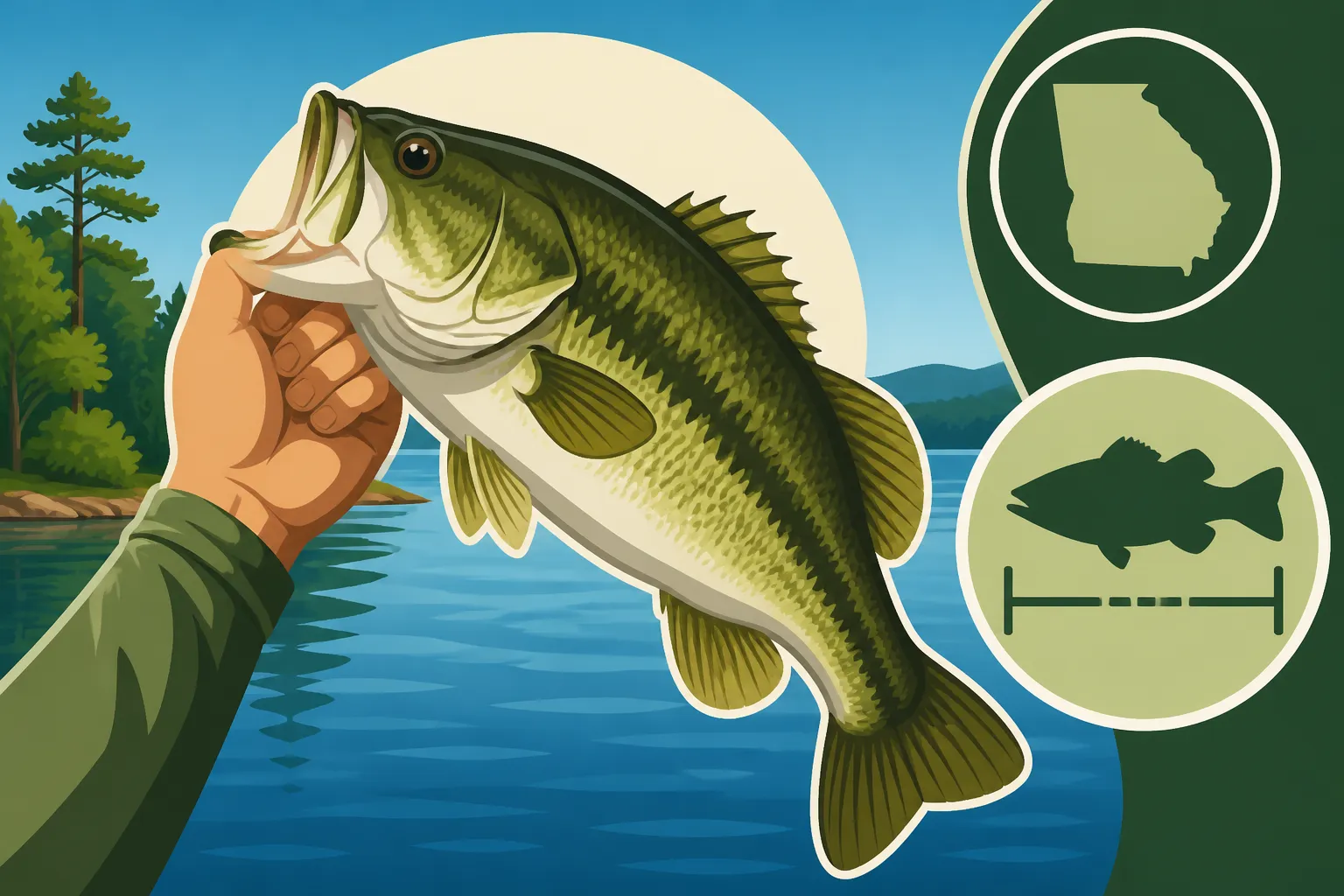
It's important to be precise when measuring. Lay the fish flat, gently compress its tail to get the longest possible measurement, and read the length from the tip of its snout to the end of its tail. Many boat owners have measuring boards mounted near the livewell, which can be super handy. If you’re not sure, it’s always safer to let the fish go.
Spotted Bass and Other Black Bass Species on Oconee
While largemouth bass are the classic targets, Lake Oconee is also home to a healthy population of spotted bass, especially in deeper, clearer areas. Spotted bass are often confused with largemouth, but there are distinct differences in their jaw structure and lateral line markings. Our guide on "Largemouth Bass vs Spotted Bass: How to Tell Them Apart in Georgia" can help you with identification.
For spotted bass on Lake Oconee, the regulations are the same as for largemouth: there is a 12-inch minimum size limit. This simplifies things, as you don't need to differentiate between the two for size purposes. Shoal bass, another black bass species, are more common in specific river systems like the Flint River, and while they could theoretically turn up in Oconee, they are not a primary species and would fall under these general black bass regulations if encountered.
The Daily Creel Limit for Bass on Lake Oconee
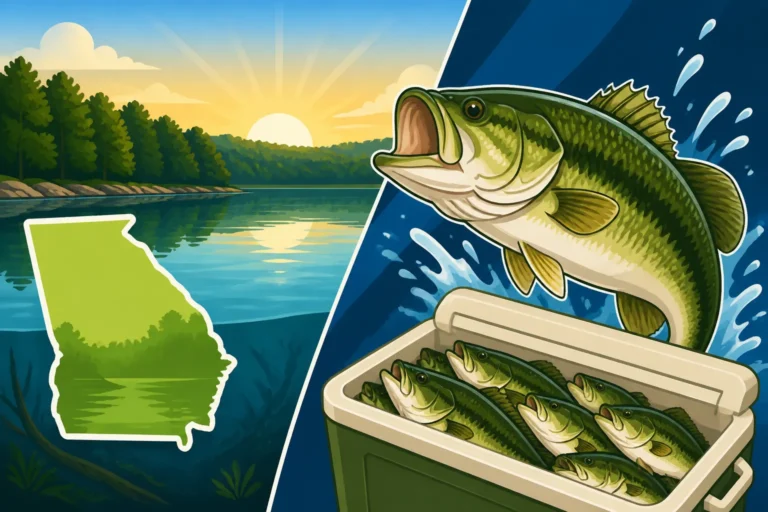
When you're out on Lake Oconee, the daily creel limit for bass is an aggregate of 10 largemouth and spotted bass per day. This means that no matter the combination, you cannot possess more than 10 of these two species combined in your cooler or livewell at any given time. For example, you could keep 5 largemouth and 5 spotted bass, or 8 largemouth and 2 spotted bass, or any other combination, as long as the total doesn't exceed 10 and each individual fish meets the 12-inch minimum length.
This aggregate limit is a common practice across Georgia to manage overall black bass populations. It ensures that anglers aren't over-harvesting a specific species while leaving another relatively untouched. Always double-check your count, especially if you're fishing with a partner, to avoid accidentally exceeding the limit. It’s a good habit to keep a running tally if you plan to retain fish.
Navigating the Nuances: Catch-and-Release vs. Keeping Fish
The decision to keep a fish or release it is a personal one, but it’s always governed by regulations. For many anglers, the thrill is in the catch itself, and they practice catch-and-release to help sustain the fishery. For others, a fresh fish dinner is part of the joy of fishing. Knowing the rules makes either choice a responsible one.
Measuring Your Catch Accurately
Getting an accurate measurement can sometimes be tricky, especially with a lively fish. The official measurement for Georgia bass is the "total length," which is measured from the tip of the snout to the furthest tip of the tail, with the tail compressed or squeezed together. This means you push the tail lobes together to get the maximum length.
To do this correctly and minimize stress on the fish, invest in a good measuring board or tape. Many anglers use bump boards – flat boards with a raised edge at one end to bump the fish's snout against, and markings for inches. You can find excellent, durable options on platforms like Amazon that are easy to read and clean. Quickly lay the fish on the board, bump its nose, compress the tail, and get your measurement. If it's clearly undersized, release it quickly and gently. If it's borderline, err on the side of caution and release it. This quick measurement reduces the time the fish is out of water, increasing its chances of survival if you're releasing it.
Understanding the "Slot Limit" Concept
You might hear the term "slot limit" when discussing bass regulations, and it's important to clarify that Lake Oconee, for its largemouth and spotted bass, does not currently operate under a slot limit. A slot limit is a regulation designed to protect fish within a specific size range, typically medium to large fish, to ensure they can reproduce and grow into trophy sizes.
For example, a lake with a slot limit might require you to release all bass between 15 and 22 inches, but allow you to keep fish under 15 inches and over 22 inches. This differs significantly from a simple minimum size limit, where anything above the minimum can be kept. Georgia does have lakes with special slot limits, such as Lake Lindsay Grace, which has a protected slot for largemouth bass. However, on Lake Oconee, if your largemouth or spotted bass is 12 inches or longer, it's legal to keep (up to your daily creel limit). Understanding this distinction is crucial so you don't mistakenly release a legal fish or keep an illegal one if you were fishing on a different lake earlier in the day.
Consequences of Not Following Lake Oconee's Bass Limits
Fishing without adherence to regulations isn't just a minor oversight; it carries real legal and ecological repercussions. It’s vital to respect these rules for your own sake and for the health of Georgia’s fisheries.
Fines and Penalties for Violations
Getting caught with undersized bass or exceeding the creel limit can lead to significant penalties. In Georgia, fishing without a valid license or violating size and creel limits can result in fines that often run into hundreds of dollars. The exact amount can vary depending on the severity of the violation, the number of fish involved, and the discretion of the enforcing officer or court. Additionally, you could face court costs, and in some cases, your fishing gear might be confiscated. Repeat offenders could even lose their fishing privileges for a period.
It's not uncommon for Georgia DNR Law Enforcement Rangers to patrol popular fishing spots like Lake Oconee, checking licenses and catches. They take these regulations seriously because they are fundamental to conservation. A quick review of "Penalties for Fishing Without a License in Georgia" can give you an idea of the seriousness of these infractions, even if you do have your license but violate other rules. Always keep your valid Georgia Fishing License Guide on hand, either digitally or a printed copy, along with the current regulations.
The Importance of Conservation for Future Fishing
Beyond the legal ramifications, respecting size and creel limits is fundamentally about conservation. These regulations are scientifically determined to ensure that enough fish are left in the water to reproduce and maintain a healthy, sustainable population. Taking too many fish, or fish that are too small to have contributed significantly to the gene pool, can quickly deplete a fishery.
By adhering to the 12-inch minimum and 10-fish aggregate limit on Lake Oconee, you're directly contributing to the lake's ecological balance. This means more healthy bass for everyone to enjoy in the future, whether for sport or for table fare. Responsible angling helps preserve the very activity we all love. It's a shared responsibility that ensures Georgia remains a premier fishing destination for years to come.
Essential Gear and Tips for Responsible Angling on Lake Oconee
To make your Lake Oconee fishing trips enjoyable and compliant, having the right tools and staying informed are key. It’s not just about the rod and reel; it’s about being prepared for every aspect of your fishing experience.
Must-Have Tools for Measuring and Handling Bass
Equipping yourself with the right accessories can make all the difference in quickly and responsibly handling your catch.
- Measuring Board or Tape: As mentioned earlier, a dedicated measuring device is crucial. Look for a durable, waterproof measuring board, often made of plastic or aluminum, that clearly marks inches. Many anglers prefer models that can be mounted near their livewell for quick measurements. You can find a wide variety of reliable options on sites like Amazon, from simple tapes to more robust boards.
- Fish Gripper: A lip gripper allows you to handle fish without touching their scales or potentially injuring yourself on hooks or fins. This is especially important for larger bass that might thrash around. It provides a secure hold and helps you get an accurate measurement before releasing or retaining the fish.
- Dehooker/Pliers: Sometimes hooks can be deeply set. Having a long-nosed pair of pliers or a specialized dehooking tool helps you remove hooks quickly and safely, minimizing harm to the fish, especially when practicing catch-and-release.
- Small Scale: If you're interested in weight, a small, portable digital scale can be a fun addition, especially if you're targeting those bigger bass. Just remember, weight doesn't negate the length requirements for keeping a fish.
Staying Informed About Regulation Changes
Fishing regulations are not static; they can change from year to year, or even mid-season if a critical issue arises. It is your responsibility as an angler to stay up-to-date with the latest rules.
- Georgia DNR Fishing Regulations Guide: The official guide, published annually by the Georgia DNR, is the most authoritative source. It’s available online on the Georgia Wildlife Resources Division website and in print at many license agents and sporting goods stores. Always check the current year’s guide before heading out.
- DNR Website and Social Media: The Georgia DNR frequently posts updates and alerts on their official website and social media channels. Following these sources can keep you informed about any emergency closures, seasonal changes, or new regulations for specific bodies of water.
- Local Bait Shops and Marinas: These local businesses are often excellent sources of real-time information. The folks working there usually fish the local waters and are up-to-date on conditions and rules. They can also offer valuable tips on "Best Fishing Spots on Lake Oconee for Beginners" or current hot baits.
- Reviewing Regulations Periodically: Even if you think you know the rules, it's a good practice to review them at the start of each fishing season or before visiting a new lake. What applies to Lake Oconee might not apply to another nearby lake, so cross-referencing is crucial.
Here's a quick comparison of the bass regulations discussed:
| Aspect | Statewide General Regulation (Most Waters) | Lake Oconee Bass Regulation | Other Specific Lakes (e.g., Lake Lanier, Lake Lindsay Grace) |
|---|---|---|---|
| Largemouth Bass Min. Size | 12 inches | 12 inches | Varies (e.g., 14 inches for Lanier; see "Reservoirs with a 14-Inch Bass Minimum in Georgia") |
| Spotted Bass Min. Size | 12 inches (often aggregate with LMB) | 12 inches (aggregate with LMB) | Varies by lake or follows statewide |
| Daily Creel Limit | 10 (aggregate Largemouth & Spotted Bass) | 10 (aggregate Largemouth & Spotted Bass) | Varies, often still 10 aggregate, but with size exceptions |
| Slot Limit | Generally No (unless specified) | No | Yes, for specific species/lakes (e.g., Lake Lindsay Grace Bass Slot Limit) |
Fishing on Lake Oconee, or any body of water in Georgia, is a privilege that comes with the responsibility of knowing and following the rules. By understanding the straightforward 12-inch minimum and 10-fish aggregate limit for largemouth and spotted bass on Lake Oconee, you're set for a rewarding and legal angling adventure.
Disclaimer
The information provided in this guide is for general informational purposes only and is subject to change. While we strive to provide accurate and up-to-date information, fishing regulations can be updated by the Georgia Department of Natural Resources at any time. It is the angler's sole responsibility to consult the most current official Georgia Fishing Regulations Guide and all local regulations before engaging in any fishing activities. Compliance with all applicable laws and regulations is mandatory.