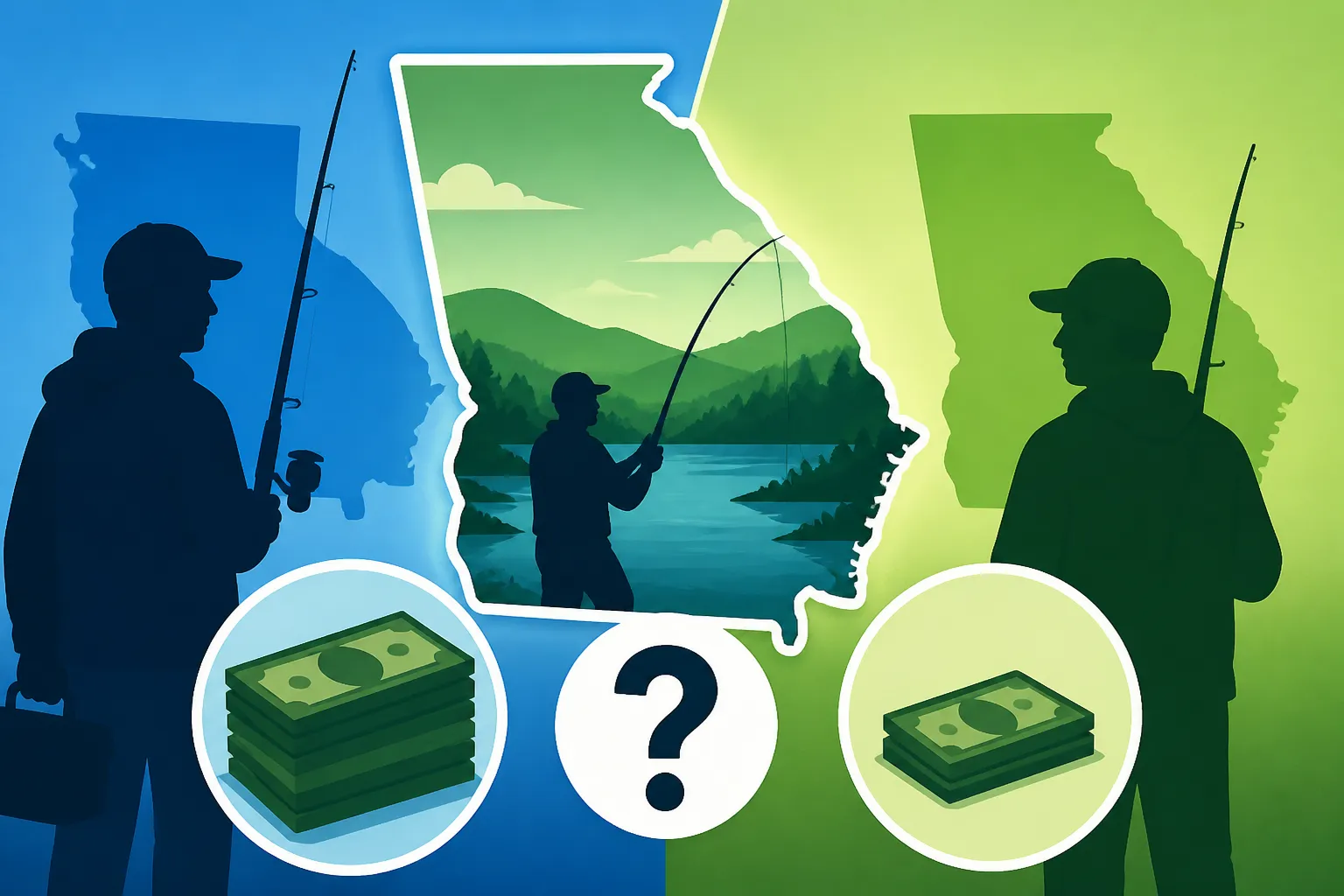
Do out-of-state anglers pay more to fish in Georgia?
It can be incredibly frustrating when you're planning a well-deserved fishing trip to a beautiful state like Georgia, only to discover that the cost of simply getting on the water might be significantly higher for you as an out-of-state angler. You're probably wondering why there's a difference, how much more you'll actually pay, and what options are available to make your visit as smooth and budget-friendly as possible. This comprehensive guide is here to unravel all those questions, helping you understand Georgia's nonresident fishing license structure and ensure you're fully prepared for your next angling adventure without any unwelcome surprises.
Understanding Georgia's Nonresident Fishing License Structure
Let's be real, nobody enjoys paying more for something just because of where they live. But when it comes to fishing licenses, it’s a pretty standard practice across the country, and Georgia is no exception. Nonresident fees are often a way for states to ensure that those who primarily benefit from their natural resources (the residents, through their taxes and other fees) are contributing proportionally to conservation efforts, fish stocking programs, and the maintenance of public access points.
Why Nonresident Licenses Cost More
The core reason behind the higher cost for out-of-state anglers isn't about being exclusionary; it's fundamentally about resource management and funding. Georgia, like many states, relies heavily on hunting and fishing license sales to fund its wildlife and fisheries divisions. These funds go directly back into the waterways, supporting projects like fish hatcheries that stock our lakes and rivers, habitat restoration efforts, and law enforcement that ensures sustainable fishing practices. Residents, through various state and local taxes, contribute continuously to the state's infrastructure and conservation. Nonresidents, who might only visit for a short period, contribute less directly to these ongoing efforts. Therefore, the higher license fee for visitors helps balance that contribution, ensuring everyone who enjoys Georgia's incredible fishing opportunities helps preserve them for future generations.
It's a system designed to protect the very fishing experiences you're coming here to enjoy. Without those funds, the quality of fishing could diminish, impacting everyone. So, while it might sting a little to pay more, it’s going towards a good cause: keeping Georgia a fantastic place to cast a line.
Different Nonresident License Types and Their Costs
Georgia offers a variety of fishing licenses tailored to different needs, which is especially helpful for out-of-state anglers who might not need an annual permit. This flexibility allows you to choose the most cost-effective option based on the length of your trip. The primary options usually include annual licenses and several short-term permits.
For instance, a nonresident annual fishing license typically offers 12 months of fishing privilege from the date of purchase. This is often the most economical choice if you plan on making multiple trips to Georgia within a year, or if your single trip extends beyond a few days. However, if you're just popping in for a weekend getaway or a quick week-long vacation, a short-term license will likely save you some money.
The state provides options like a nonresident 1-day fishing license, a Georgia's $20 Nonresident 3-Day License Explained, and a nonresident 7-day fishing license cost. Each option offers a set number of consecutive days of fishing, allowing you to maximize your angling time without paying for a full year's worth of access that you won't use. It’s important to remember that these short-term licenses are usually valid for consecutive days, so if you buy a 3-day license, those three days start immediately and run back-to-back, regardless of whether you fish or not.
The Annual vs. Short-Term Debate for Out-of-State Anglers
Deciding between an annual or a short-term license largely boils down to your travel plans and how frequently you anticipate fishing in Georgia. If you're planning a single, brief trip, say a long weekend, then a 3-day or 7-day license is almost certainly your best bet. The cost is significantly lower than the annual fee, making it a budget-friendly way to enjoy the state's waters.
However, if you're an angler who lives just over the state line and frequently crosses into Georgia for a day trip or an extended stay, or if you're planning multiple visits throughout the year – perhaps one in the spring for bass and another in the fall for trout – then the annual nonresident license could offer considerable savings. It’s worth doing a quick calculation: compare the cost of two or three short-term licenses against the annual fee. Often, if you're visiting more than twice a year, the annual pass becomes the more economical choice. Plus, having an annual license means one less thing to worry about before each trip; you're always good to go!
Essential Add-Ons and Permits for Nonresidents
Beyond the basic fishing license, Georgia has a few specific permits that might be required depending on where and what you plan to fish for. These aren't always immediately obvious, especially if you're new to the state's regulations, but they are absolutely critical to avoid penalties.
Navigating the Mountain Trout License Add-On
If your dream is to experience the pristine streams and stunning natural beauty of North Georgia's trout country, then simply having a general fishing license isn't enough. You'll need an additional Mountain Trout License Add-On in Georgia. This permit is specifically designed for anyone planning to fish for trout in the designated trout streams of North Georgia. The cost is the same for residents and nonresidents, but it is an additional fee on top of your base fishing license.
This add-on helps fund specific trout management programs, including the extensive trout stocking schedule that makes these mountain streams so productive. Without this additional license, you'll be in violation of state regulations, which could lead to fines and a ruined fishing trip. So, if you're heading to the Toccoa River, the Chattahoochee River headwaters, or any of the beautiful smaller creeks, make sure you have this add-on in hand. You can often purchase this add-on when you buy your primary fishing license, whether online, over the phone, or through a licensed agent. This makes it super convenient to ensure you're fully covered. For more detailed information, check out what license do you need for mountain trout fishing?.
The Georgia Saltwater Information Permit (Free, but Required!)
This one often catches people off guard because it’s free, but don't let that fool you into thinking it's optional! If you plan on doing any saltwater fishing along Georgia's stunning coast – from the Golden Isles to the barrier islands – you are required to possess a Georgia Saltwater Information Permit. While there's no fee associated with it, obtaining this permit is mandatory for anyone age 16 and older, whether resident or nonresident, who is fishing in saltwater.
The purpose of this free permit is primarily for data collection. The information gathered from permit holders helps the Georgia Department of Natural Resources (DNR) better understand fishing pressure, catch rates, and overall fish populations in coastal waters. This data is invaluable for managing marine fisheries sustainably, ensuring that species like redfish, speckled trout, and flounder remain abundant for future generations. You can easily obtain this permit when you purchase your fishing license, or as a standalone item, through the Georgia DNR website, a license agent, or by phone. Just make sure you do it! This is crucial; many anglers assume their basic license covers everything, but saltwater fishing is distinct. You can find more details on the Georgia Saltwater Information Permit Explained.
The Financial Breakdown: Comparing Resident vs. Nonresident Costs
The main question on your mind is likely: "Just how much more do I pay?" It's a fair question, and the difference can be substantial. Let's lay out some typical costs to give you a clear picture. Please note that these figures are subject to change, so always check the Georgia Department of Natural Resources website for the most current pricing.
A Side-by-Side Look at License Prices
To illustrate the difference, let's look at some approximate current prices for common licenses. This table will highlight how nonresident fees typically stack up against resident fees for similar durations.
| License Type | Georgia Resident (Approx. Annual Cost) | Nonresident (Approx. Annual Cost) | Nonresident (Approx. 1-Day Cost) | Nonresident (Approx. 3-Day Cost) | Nonresident (Approx. 7-Day Cost) |
|---|---|---|---|---|---|
| Basic Fishing License | $15.00 | $50.00 | $10.00 | $20.00 | $30.00 |
| Mountain Trout Add-On | $10.00 | $10.00 | N/A | N/A | N/A |
| All-Inclusive Sportsman's | $50.00 | $160.00 | N/A | N/A | N/A |
Note: These are illustrative prices and may vary. Always confirm current pricing on the Georgia DNR website before purchasing.
As you can clearly see, a nonresident annual fishing license is significantly more expensive than a resident one – often more than triple the cost for the basic fishing license. This difference really highlights the state's reliance on resident contributions for its ongoing conservation efforts. However, the short-term options provide a much more palatable entry point for visitors, making those brief trips more affordable. The Mountain Trout Add-On, thankfully, maintains the same price for everyone, reflecting the specialized nature of that particular fishery. For a complete list of current costs and types, you can explore the Georgia Fishing License Costs and Types.
When the Price Difference Makes Sense
The price difference might seem steep at first glance, but it starts to make sense when you consider the economics from the state's perspective. Think about the infrastructure: boat ramps, public fishing areas, fish hatcheries, and the salaries of the biologists and wildlife officers. Residents contribute to these through their taxes year-round, regardless of whether they fish. Nonresidents, on the other hand, are typically visitors who benefit from these resources without the same level of consistent contribution.
The higher nonresident fee helps offset this disparity. It's a user fee that ensures everyone enjoying the state's natural bounty is contributing to its upkeep. If you're planning a trip to Georgia, view the license fee as an investment in the quality of your fishing experience and the longevity of Georgia's vibrant fisheries. It's not just a charge; it's a contribution to keeping those lakes and rivers teeming with fish. For example, the Georgia Freshwater Fishing Rules are put in place and enforced by agencies funded by these licenses.
Smart Strategies for Minimizing Nonresident Costs
While you can’t completely eliminate the price difference, there are smart ways to minimize your outlay as an out-of-state angler. The first, and most obvious, is to carefully choose your license type based on your trip's duration. Don't buy an annual license if you're only fishing for three days.
Secondly, consider your fishing goals. If you're only interested in bass fishing in a reservoir and have no intention of targeting trout in mountain streams, then don't purchase the Mountain Trout Add-On. Only buy what you absolutely need for the specific type of fishing you'll be doing.
Lastly, plan your trip carefully. If you know you'll be making a few separate visits within a 12-month period, compare the cumulative cost of individual short-term licenses versus the annual nonresident license. Sometimes, one annual license is cheaper than buying two or three separate 3-day or 7-day licenses. Additionally, before you even set foot in Georgia, many anglers find themselves browsing sites like Amazon for new gear or researching tactics specific to Georgia’s waters. While you can't buy your license on Amazon, picking up a good Georgia fishing map or a specialized lure there might just improve your chances of success, making that license fee feel even more worthwhile.
Common Questions and Misconceptions for Visiting Anglers
Traveling to a new state to fish always comes with a few unknowns. Even seasoned anglers can get tripped up by subtle differences in regulations or purchasing procedures. Let's address some common questions and clear up a few misconceptions that nonresident anglers often have.
Reciprocity Agreements with Neighboring States
A very common question is about reciprocity: "Does my Alabama, Florida, or Tennessee license work in Georgia?" Unfortunately, for general statewide fishing, the answer is almost universally no. Georgia generally does not have full reciprocity agreements with neighboring states that allow you to use your home state's fishing license to fish entirely within Georgia's waters. Each state requires its own fishing license.
There are, however, very specific and limited exceptions, primarily on shared border waters. For example, sometimes on lakes that straddle state lines, like Lake Lanier (though that's entirely in Georgia), or more commonly, the Savannah River basin (which borders South Carolina), there might be reciprocal agreements that allow anglers with a license from either state to fish in certain shared sections of the water body. These agreements are usually highly specific and apply only to those particular shared waters, not to the entire state. Always double-check with the Georgia DNR or the wildlife agency of the bordering state for the most up-to-date information on any such agreements before you assume your out-of-state license is valid. For a deeper dive into this, you can check Fishing License Reciprocity for Georgia Anglers.
What Happens if You're Caught Without the Right License
This is a critical point that cannot be stressed enough: fishing without a valid Georgia fishing license, or without the necessary add-ons like the Mountain Trout License, can lead to significant penalties. Wildlife resources rangers take these violations seriously because it directly impacts the funding for conservation. The consequences can range from hefty fines to the confiscation of your fishing gear, and potentially even a ban from fishing in Georgia for a period of time.
Imagine traveling all the way to Georgia for a fishing trip, only to have it cut short and costly because of an oversight. It's a scenario no one wants. Fines for fishing without a license can easily be several hundred dollars, far exceeding the cost of even the most expensive nonresident annual license. The hassle, embarrassment, and lost fishing time simply aren't worth it. So, before you even make your first cast, ensure you have all the proper documentation. You can learn more about the consequences by reading Penalties for Fishing Without a License in Georgia.
Buying Your License: Online, Phone, or In-Person
Getting your Georgia fishing license is generally a straightforward process, no matter if you're a resident or a nonresident. You have several convenient options:
- Online: This is often the easiest and quickest method. The Georgia Department of Natural Resources (DNR) website has a user-friendly portal where you can purchase your license with a credit card. You'll usually receive an immediate confirmation and can often print a temporary license right then and there, or simply have the confirmation number available on your phone. This is a great way to ensure you have your license before you even leave home. For detailed instructions, see How to Buy a Fishing License Online in Georgia.
- By Phone: If you prefer to speak to a person or have questions, you can call the Georgia DNR licensing division. They can assist you with purchasing your license over the phone. Make sure you have your personal information and payment details ready.
- In-Person (License Agents): Georgia has a network of authorized license agents located across the state. These often include bait and tackle shops, sporting goods stores (like certain Dick's Sporting Goods or Bass Pro Shops locations), and some county tag offices. Buying in person can be helpful if you need immediate assistance or want to grab some last-minute bait and tackle at the same time. You can find a list of Georgia License Agents Near You on the DNR website. Before heading out to fish, you might even find some specialized fishing tools or robust fishing apparel on Amazon that will perfectly complement the gear you pick up at a local tackle shop. Having the right tools, whether it’s a specific kind of fishing plier or a reliable cooler, can really enhance your day on the water.
No matter which method you choose, make sure to purchase your license before you head out to fish. It's much better to be prepared than to face potential fines or disappointment.
Disclaimer
Please remember that fishing regulations, license costs, and requirements can change. While every effort has been made to provide accurate and up-to-date information in this guide, it is always your responsibility to verify the current regulations directly with the Georgia Department of Natural Resources (DNR) before you go fishing. This content is for informational purposes only and should not be considered legal advice.