Reservoirs with a 14-Inch Bass Minimum in Georgia
Navigating Georgia's fishing regulations can sometimes feel like trying to untangle a particularly stubborn bird's nest of fishing line – confusing, frustrating, and prone to snagging you when you least expect it. One area that often trips up even seasoned anglers is the specific size limits for bass, especially when certain reservoirs deviate from the statewide standard. This guide is here to clear the waters, detailing which Georgia reservoirs enforce a 14-inch minimum length for bass and what that means for your next fishing trip.
Understanding Georgia's Varied Bass Regulations
It’s easy to assume that all bass fishing rules are the same across Georgia, but that’s simply not the case. The Georgia Department of Natural Resources (DNR), specifically the Wildlife Resources Division, employs a nuanced approach to fishery management, recognizing that different bodies of water have unique ecosystems and population dynamics. This is why you'll find varying regulations depending on whether you're fishing a small pond, a major river, or one of Georgia's sprawling reservoirs. These regulations aren't just arbitrary rules; they're scientifically determined strategies designed to promote healthy fish populations and enhance the quality of fishing for everyone.
Statewide Versus Reservoir-Specific Limits
Generally, for largemouth bass, Georgia has a statewide regulation that allows anglers to keep bass of any size, with a daily creel limit of 10 fish. This often leads new anglers, or those visiting from out of state, to believe this rule applies everywhere. However, many of Georgia’s most popular and productive reservoirs have special regulations that supersede the statewide rule. These special regulations are often put in place to manage fish populations more effectively in these larger, more intensely fished bodies of water. The most common special regulation you’ll encounter is a minimum length limit, such as the 14-inch minimum for bass, which is precisely what we'll dive into today.
Understanding the difference between the general statewide rule and these localized, reservoir-specific rules is critical. Failing to do so can result in citations, fines, and a lot of unnecessary hassle. Always check the current fishing regulations for the specific body of water you plan to visit. You can find a comprehensive breakdown in the Georgia Fishing Regulations Explained guide provided by the state.
The Rationale Behind Minimum Length Limits
So, why do these 14-inch minimums exist? It's all about managing the bass fishery for optimal health and angler satisfaction. Minimum length limits, often referred to as "slot limits" when combined with a maximum length, are designed to protect a certain segment of the fish population. For instance, a 14-inch minimum means that any bass shorter than 14 inches must be immediately released.
This strategy serves several key purposes. First, it protects juvenile bass, giving them a chance to grow into larger, more reproductively mature adults. By ensuring these younger fish survive to spawn multiple times, the overall population remains robust and self-sustaining. Second, it often aims to increase the average size of bass in a given body of water. If anglers are consistently harvesting smaller fish, the population might become stunted, with fewer opportunities for larger, trophy-sized bass to develop. By encouraging the release of smaller bass, these rules help maintain a healthy size structure, leading to better fishing experiences for everyone down the line. It's about balancing harvest with conservation to create a sustainable and enjoyable resource.
Key Georgia Reservoirs with a 14-Inch Bass Minimum
When you're gearing up for a bass fishing adventure in Georgia, it's absolutely essential to know which waters have that 14-inch minimum in place. These aren't obscure little ponds; they are some of the biggest and most popular fishing destinations in the state, drawing thousands of anglers annually. Ignoring these specific rules can lead to serious consequences, not to mention a hit to the health of the fishery itself. Let's take a closer look at the prominent reservoirs where this rule applies.
Lake Lanier: A Northern Georgia Giant
Lake Lanier, a true jewel of North Georgia, is perhaps one of the most well-known reservoirs with a 14-inch minimum length limit for largemouth bass. Located just north of Atlanta, Lanier is a massive impoundment, famous not only for its incredible striped bass fishery but also for its strong population of largemouth and spotted bass. The 14-inch minimum here is crucial because Lanier sees immense fishing pressure. Without it, anglers might inadvertently deplete the population of smaller, growing bass, leading to a decline in the overall quality of the fishery over time.
When you're out on Lanier, whether you're targeting bass around docks, submerged timber, or deep creek channels, remember that any largemouth bass you catch must measure at least 14 inches from the tip of its nose to the tip of its tail (with the tail compressed) before you can consider keeping it. This rule applies uniformly across the entire lake. Many anglers on Lanier are serious about conservation, practicing catch and release for even larger fish, but adhering to this minimum is non-negotiable for anyone planning to harvest. If you're planning a trip, be sure to check out the more detailed Lake Lanier Fishing Guide, Georgia for in-depth information.
Lake Oconee: The "Big O" and Its Rules
Further south and east, Lake Oconee, often affectionately called the "Big O," is another premier bass fishing destination that adheres to the 14-inch minimum length limit for largemouth bass. Lake Oconee is a power-generation lake, known for its productive waters, especially for crappie and its famous hybrid striped bass fishery, but its largemouth bass population is equally robust. The consistent water temperatures, influenced by the power plant, can create excellent year-round fishing opportunities, making the 14-inch minimum particularly important to protect the growing bass population from continuous harvest.
Fishing Lake Oconee, Georgia involves understanding its unique characteristics, including areas with submerged hydrilla, timber, and numerous docks. As you explore its fertile coves and main lake points, keep that measuring tape handy. Any largemouth bass under 14 inches must go back into the water immediately. Anglers who frequent Oconee often report catching plenty of bass just under the legal limit, which speaks to the health of the fishery and the effectiveness of this regulation in allowing those fish to mature.
West Point Lake: Border Water Bass Regulations
Straddling the Georgia-Alabama border on the Chattahoochee River, West Point Lake also enforces a 14-inch minimum length for largemouth bass. This lake is a significant fishery for both states, offering excellent opportunities for bass, crappie, and catfish. Because it's a border water, it's extra important to be aware of the specific regulations, as they can sometimes differ slightly from inland Georgia lakes, or from Alabama's general rules. However, for largemouth bass, the 14-inch minimum is consistent across the Georgia portion of the lake.
West Point Lake Fishing Spots, Georgia offers diverse fishing environments, from rocky banks and deep channels to expansive flats and standing timber. The 14-inch minimum here helps sustain a strong population of largemouth bass, ensuring that anglers can consistently find quality fish. Given the popularity of this lake for tournaments and recreational fishing, protecting the younger bass is vital for its long-term health and reputation as a top bass fishing destination. Always double-check your measurements, especially if you're fishing near the state line, to ensure compliance with both Georgia's and any reciprocal Alabama regulations.
Walter F. George Reservoir: The Lake Eufaula Connection
Known more commonly to many as Lake Eufaula, the Walter F. George Reservoir is another large impoundment on the Chattahoochee River that forms part of the Georgia-Alabama border. This lake is famous nationwide for its incredible bass fishing, often touted as one of the best bass lakes in the country. Naturally, with such a reputation, careful management is paramount, and it comes as no surprise that Walter F. George Reservoir also has a 14-inch minimum length limit for largemouth bass.
The "Bass Capital of the World" title isn't just for show; the fishery here is meticulously managed. The 14-inch minimum plays a significant role in maintaining the lake's legendary status by allowing a strong class of bass to grow into impressive sizes. Whether you're fishing the countless cypress trees, hydrilla beds, or offshore structure, you'll be putting that measuring board to good use. For more on this productive water, check out the Walter F. George Reservoir Fishing Guide, Georgia. Remember, on these border waters, always carry the appropriate fishing licenses for the state you're actively fishing in, even if you’re just crossing a boundary line.
Lake Blackshear: Central Georgia's Bass Haven
Moving into Central Georgia, Lake Blackshear presents another fantastic opportunity for bass anglers, and yes, it also adheres to the 14-inch minimum length limit for largemouth bass. This beautiful lake is a popular destination for both recreation and fishing, known for its scenic beauty and diverse fish populations, including excellent crappie and catfish. The bass fishery is particularly strong, making the 14-inch minimum an important conservation tool.
Lake Blackshear Fishing Spots in Georgia include extensive cypress stands, lily pads, and a mix of shallow and deeper waters. This environment is ideal for growing healthy bass, and the minimum size limit helps ensure that the intermediate-sized bass have ample opportunity to grow larger before being harvested. Anglers often find success here with a variety of techniques, from topwater lures around structure to pitching jigs into heavy cover. No matter your preferred method, always measure your largemouths carefully before deciding to keep them.
Other Public Fishing Areas (PFAs) with Similar Rules
Beyond these major reservoirs, it's also worth noting that many of Georgia's Public Fishing Areas (PFAs) often implement specific length and creel limits that can include a 14-inch minimum for bass. These managed ponds and smaller lakes are designed to provide accessible, high-quality fishing experiences, and as such, they are intensively managed. Examples like Marben Farm PFA near Covington or Paradise PFA near Tifton often have their own unique regulations, including bass minimums, to optimize their fisheries for consistent production and larger fish. Always consult the specific PFA's rules before you drop a line. These smaller, community-focused fisheries are fantastic for family outings, and adhering to their specific rules is key to keeping them productive for everyone.
Navigating the Nuances: What a 14-Inch Minimum Means for Anglers
Encountering a 14-inch bass minimum isn't just about remembering a number; it fundamentally changes how you approach your fishing trip. It requires a conscious effort in measurement, a commitment to proper handling, and an appreciation for the long-term health of the fishery. For those used to a "keep what you catch" mentality, this shift can take some getting used to, but it's ultimately for the betterment of Georgia fishing for all of us.
Measuring Your Catch Accurately
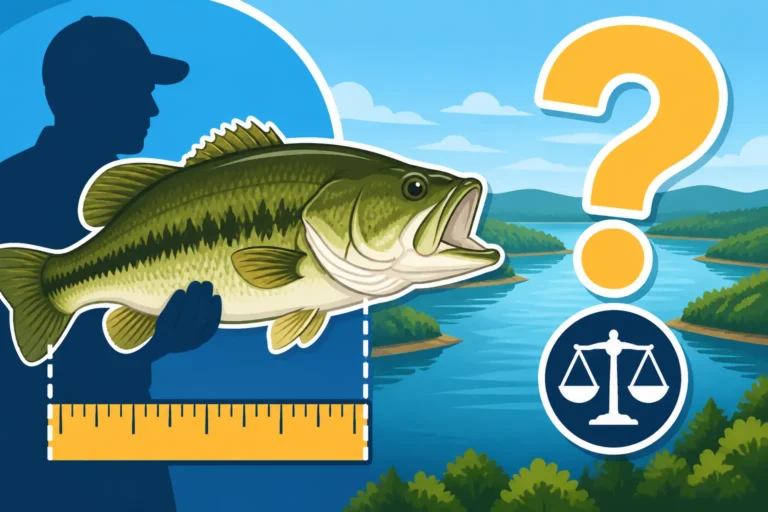
The absolute first thing you need to master when fishing in waters with a minimum length limit is accurate measurement. It might sound simple, but in the heat of the moment, or with a flopping fish, it’s easy to make a mistake. The standard for measuring fish in Georgia is from the tip of the nose (mouth closed) to the tip of the tail, with the tail compressed. This means gently squeezing the tail lobes together to get the longest possible measurement.
To do this correctly, you'll need a reliable measuring device. A simple bump board or a flexible measuring tape securely affixed to your boat or kayak is ideal. Many anglers opt for portable, rigid measuring boards that provide a clear stop for the fish's nose and accurate markings for length. You can find a wide variety of these, from basic plastic models to more elaborate aluminum ones, on platforms like Amazon. When you land a bass, quickly and carefully place it on the measuring board. Ensure its nose is against the bump, and its body is straight. Compress the tail and read the measurement. If it's even a hair under 14 inches, back into the water it goes. There's no "close enough" when it comes to legal limits.
Catch-and-Release Best Practices for Undersized Bass
Since you'll be releasing a lot of bass under 14 inches (and probably many over, too, if you're a sports angler!), mastering proper catch-and-release techniques is paramount. A poorly handled fish is a dead fish, regardless of whether it was undersized or not. The goal is for that fish to swim away strong and continue growing.
Here are some best practices:
- Minimize Air Time: Keep the fish in the water as much as possible. If you need a photo, get it quickly and hold the fish horizontally, supporting its belly.
- Handle with Care: Wet your hands before touching the fish to protect its slime coat, which is vital for its immune system. Avoid squeezing its belly, especially around the internal organs. If you use a lip gripper, ensure it's not crushing the jaw and always support the body.
- Remove Hooks Gently: Use needle-nose pliers or a de-hooking tool to quickly remove the hook. If the hook is deeply swallowed, it's often best to cut the line as close to the hook as possible rather than tearing up the fish's throat. Barbless hooks can also make removal much easier and cause less damage.
- Revive If Necessary: If the fish seems sluggish or disoriented after being caught, hold it gently in the water, facing into the current (or move it back and forth if there's no current) until it regains its strength and can swim away on its own.
- Consider the Conditions: On hot summer days, fish are more stressed. During these times, it’s even more critical to minimize handling and release them as quickly as possible. For detailed tips on responsible angling, you might find information on How to Catch and Release Trout Properly, which shares many principles applicable to bass.
Why This Rule Benefits the Fishery
It's easy to see a regulation like the 14-inch minimum as an inconvenience, but it's a vital component of sustainable fishery management. This rule isn't designed to make fishing harder; it's designed to make it better in the long run. By allowing bass to reach at least 14 inches, we're giving them more time to:
- Mature and Reproduce: Larger bass are typically more reproductively mature, meaning they contribute more significantly to the next generation of fish. This ensures a healthy, self-sustaining population, reducing the need for costly stocking programs and creating a more natural ecosystem.
- Increase Overall Size Structure: When smaller bass are released, they grow. This increases the proportion of larger, more desirable fish in the lake. Over time, anglers will encounter more 14-inch, 16-inch, and even trophy-sized bass, enhancing the quality of the fishing experience for everyone. This directly impacts the Statewide Largemouth Bass Size Limits in Georgia by creating a higher average size in specific, popular waters.
- Support a Healthy Food Web: A balanced bass population, with a good mix of sizes, helps maintain a healthy predator-prey balance within the lake's ecosystem. It means there are enough smaller bass to feed larger predators, and enough larger bass to keep panfish populations in check, preventing overpopulation and stunting of other species.
Think of it as an investment. Every legal-sized bass you release, and every undersized one you gently send back, contributes to a richer, more vibrant fishing future in these incredible Georgia reservoirs. This approach helps answer the question of How many bass can you keep per day in Georgia by providing a size-based framework for harvest.
Essential Gear and Techniques for 14-Inch Minimum Lakes
When you're fishing waters with a 14-inch minimum for bass, it’s not just about the rules; it’s about adapting your approach. You're implicitly targeting fish that are either already at or beyond that size, or you're preparing to handle and release those that aren't quite there yet. This often means adjusting your gear and techniques to be more effective at catching larger fish and ensuring their safe release.
Choosing the Right Rods and Reels
For bass fishing in these trophy-potential waters, having the right rod and reel can make a significant difference. While a lightweight spinning combo might be fun for panfish, it’s often insufficient for effectively battling larger bass or extracting them from heavy cover, which is where those bigger fish often lurk.
- Rods: Look for medium-heavy to heavy power rods, typically in the 6'6" to 7'6" range. A faster action tip is beneficial for quick hook sets, especially when fishing Texas rigs or jigs in cover. Fiberglass rods or composite rods offer more forgiveness for crankbaits, while graphite is excellent for sensitivity when fishing soft plastics. A good all-around choice for many situations might be a 7-foot medium-heavy fast action spinning or casting rod. You can find robust options for different techniques readily available from retailers like Amazon.
- Reels: Matching your reel to your rod and target species is key. For casting setups, a baitcasting reel with a gear ratio suited to your preferred technique is essential. Faster ratios (7.1:1 or higher) are great for quickly retrieving line and working topwater lures or jigs, while slower ratios (6.4:1 or lower) provide more power for crankbaits and deep-diving lures. For spinning setups, a 2500-4000 series reel, spooled with 10-20lb braided line or good quality monofilament, offers versatility. If you need a comprehensive overview, checking out a guide on the Best Rods and Reels for Georgia Largemouth Bass can provide tailored recommendations.
Bait and Lure Strategies for Larger Bass
When the goal is to target bass capable of reaching or exceeding 14 inches, your lure selection might shift slightly. While smaller finesse baits will certainly catch fish of all sizes, often, "big bait, big fish" holds some truth.
- Larger Profile Baits: Consider throwing lures with a more substantial profile. This includes larger crankbaits (especially those designed to dive deeper), bigger spinnerbaits with tandem willow blades, and robust lipless crankbaits. For soft plastics, consider 7-10 inch worms, large creature baits, or big Texas-rigged Senkos.
- Jigs: Jigs are perennial big bass producers. Whether it's a ½ oz football jig worked on offshore humps or a ¾ oz flipping jig pitched into heavy laydowns, jigs imitate crawfish and baitfish, and often draw strikes from larger, more aggressive bass.
- Topwater Lures: During prime low-light conditions or specific seasons, larger topwater baits like frogs, buzzbaits, or walking baits can be incredibly effective at drawing explosive strikes from big bass.
- Live Bait: If live bait is your preference, larger shiners, shad, or even bluegill (where legal) can entice bigger bass that are looking for a substantial meal.
- Match the Hatch: Regardless of the lure type, always try to "match the hatch." Observe what baitfish are present in the water, or what forage the bass are likely eating, and choose your lures accordingly in terms of size, color, and action. Consulting a guide on Choosing Lures by Season can give you excellent insights into what to throw when.
Fish Finders and Electronics for Structure Fishing
Modern electronics have revolutionized bass fishing, especially on large reservoirs where bass often relate to specific underwater structures. If you're serious about consistently finding those 14-inch-plus bass, a good fish finder is an invaluable tool.
- Sonar and Down/Side Imaging: A quality unit with traditional 2D sonar, along with Down Imaging and Side Imaging, allows you to "see" the underwater world. You can identify brush piles, rock formations, humps, ledges, and even individual fish. Larger bass often hold tight to these structures, especially during periods of high sun or cold fronts.
- GPS and Mapping: Integrated GPS with detailed lake maps (like those from Navionics or Lakemaster) allows you to mark waypoints of productive spots, navigate safely, and understand the contours of the lakebed. You can save your "hot spots" where you've found bigger bass, ensuring you can return to them later.
- Trolling Motors with Spot-Lock: While not strictly an "electronic" fish finder, modern trolling motors with GPS-enabled "Spot-Lock" features (like those from Minn Kota or Garmin) can keep your boat precisely positioned over productive structure, allowing you to thoroughly fish an area without constantly repositioning. This is a game-changer for working discrete pieces of cover where big bass might be hiding. Investing in a good fish finder can significantly improve your success rate in finding and staying on bigger fish.
Frequently Asked Questions About Bass Minimums
Even with a clear understanding, questions often pop up when it comes to specific fishing regulations. Here are some common queries that anglers frequently have about the 14-inch bass minimum in Georgia's reservoirs.
Does This Apply to All Bass Species?
This is a really important distinction! The 14-inch minimum length limit in these specific Georgia reservoirs primarily applies to largemouth bass. Georgia is home to other black bass species, namely spotted bass and shoal bass. Generally, spotted bass, which are abundant in many of these same reservoirs (like Lanier and Oconee), do not have a 14-inch minimum and usually fall under the statewide limit, which means any size can be kept up to the creel limit. Shoal bass, found in specific river systems, also have their own unique regulations, which can include different minimums or even catch-and-release only sections.
However, anglers must be able to accurately identify the species of bass they catch. Largemouth bass are typically distinguished by a jawline that extends beyond the eye, and a dark, unbroken lateral line. Spotted bass have a jawline that doesn't extend beyond the eye and often have a rough patch of teeth on their tongue. While both are "bass," mistaking a largemouth for a spotted bass can lead to a violation. Always consult the official Georgia fishing regulations to confirm the specific rules for each bass species on the body of water you are fishing.
What If I Accidentally Keep an Undersized Bass?
Accidents happen, especially to new anglers or those unfamiliar with specific regulations. However, ignorance of the law is generally not considered a valid defense. If a Georgia DNR game warden finds you in possession of an undersized largemouth bass on one of these regulated reservoirs, you can face penalties.
Penalties for fishing without a license in Georgia, or for violating size and creel limits, typically include fines and potentially even forfeiture of your fishing gear. The exact amount of the fine can vary depending on the severity of the violation and the discretion of the issuing officer or court. It's not worth the risk. That's why meticulous measurement and immediate release of undersized fish are so critical. If you accidentally put an undersized fish in your livewell, and then realize your mistake, the best course of action is to immediately release it if it's still alive and you're still on the water. However, once a fish is deceased and in your possession, the violation has likely occurred. The safest approach is always to measure twice and think before you keep!
How Do I Stay Up-to-Date on Regulations?
Fishing regulations are not static; they can change from year to year based on biological surveys, environmental conditions, and management goals. Relying on outdated information or hearsay is a recipe for trouble.
Here's how to ensure you're always fishing legally:
- Official Georgia DNR Website: The Georgia Department of Natural Resources (DNR), Wildlife Resources Division, is the authoritative source. Their website always has the most current digital version of the fishing regulations.
- Annual Fishing Guide: Every year, the Georgia DNR publishes a comprehensive fishing regulations guide. These are available in print at most sporting goods stores, bait shops, and DNR offices, and as a downloadable PDF online. Always grab the newest guide at the start of each fishing season.
- Local Bait and Tackle Shops: These local experts often have up-to-the-minute information on local regulations, special conditions, and recent changes. Don't hesitate to ask when you pick up your bait.
- Signage at Boat Ramps: Many boat ramps and public access points will have signage detailing the specific rules for that body of water. Pay attention to these signs, as they are specifically tailored to the area you are entering.
Before any fishing trip, especially to a new-to-you body of water, make it a habit to quickly review the regulations for that specific lake or river. A few minutes of research can save you a lot of headache and ensure you're contributing positively to Georgia's incredible fishing resources. Remember, even purchasing your license, whether through How to Buy a Fishing License Online in Georgia or in person, will often come with access to the latest regulations.
Disclaimer
The information provided in this guide is for general informational purposes only and is not intended as legal advice. Fishing regulations are subject to change, and it is the sole responsibility of the angler to understand and comply with all current federal, state, and local laws and regulations before engaging in any fishing activities. Always consult the official Georgia Department of Natural Resources (DNR) Wildlife Resources Division publications for the most accurate and up-to-date information.