Waters Creek Trout Size Rules, Georgia
It's no secret that navigating Georgia's fishing regulations can sometimes feel like trying to untangle a bird's nest of fishing line. Every lake, every river, and especially every specific trout stream seems to have its own unique set of rules, leaving even seasoned anglers scratching their heads. Waters Creek, a true gem in North Georgia, is one of those special places with highly specific trout size rules designed to protect its valuable fish populations. This guide will meticulously break down those regulations, helping you understand exactly what's required for a successful and legal angling experience on this remarkable creek.
Understanding Waters Creek's Unique Trout Regulations
Waters Creek isn't just another run-of-the-mill trout stream in Georgia; it's a meticulously managed "trophy trout" stream. This designation means that the regulations here are intentionally more stringent than what you'd typically encounter on other public trout waters. The Georgia Department of Natural Resources (DNR), through its Wildlife Resources Division, oversees Waters Creek with a clear objective: to cultivate an exceptional fishing experience while rigorously protecting the health and genetic integrity of its resident wild and stocked trout populations. It's a place where the thrill of the catch is balanced with a deep commitment to conservation, demanding a thoughtful and informed approach from every angler. Disregarding these specific rules isn't merely a minor infraction; it can lead to significant repercussions, including fines and the potential loss of fishing privileges.
The General Rule vs. Special Regulations
Most of Georgia's trout waters operate under what are broadly termed "general regulations." These typically permit a daily creel limit of eight trout with no minimum size restriction, simplifying compliance for many anglers. However, Waters Creek falls squarely into a special regulatory category. It's one of a select group of streams across the state managed intensively for quality and the pursuit of trophy-sized fish. This unique designation means that the standard "general rules" simply do not apply here. Instead, you'll find regulations meticulously crafted for Waters Creek, emphasizing catch-and-release for the vast majority of fish and protecting larger, reproductively valuable individuals.
The fundamental intent behind these specialized regulations is to nurture a robust, self-sustaining trout fishery where anglers genuinely have the opportunity to hook into larger, more challenging fish. It represents a deliberate trade-off: a reduced harvest in exchange for a more pristine, biologically rich, and ultimately more rewarding angling experience. Therefore, before you even consider making your first cast into Waters Creek, it's absolutely paramount to internalize that the fishing knowledge you've accumulated from your local pond or even another Georgia river likely won't suffice here. Always take the time to verify the most current rules, perhaps with a quick visit to the Georgia DNR website or by acquiring the latest Georgia Fishing Regulations Explained publication.
Seasonal Considerations
While Waters Creek consistently maintains its stringent trophy trout regulations year-round, there are subtle seasonal variations that, while not altering the size limits, can certainly influence your fishing experience. For instance, much like many other trout streams, Waters Creek benefits from the state's comprehensive trout stocking program. During the peak stocking periods, which typically commence in March and extend through the spring and early summer, you might observe a higher density of fish. However, it's crucial to remember that this increase in fish numbers does not in any way modify the strict size and creel limits. The stocked fish serve to augment the existing population and enhance angling opportunities, but they remain subject to the same restrictive rules designed to safeguard the overall ecological health of the stream. You can always check the Georgia Trout Stocking Schedule to see when streams are being stocked.
Furthermore, water temperatures and flow rates can fluctuate significantly with the changing seasons, directly impacting where trout prefer to hold and how actively they feed. While the regulations themselves remain constant, developing an understanding of these seasonal patterns can dramatically improve your success within the existing regulatory framework. For instance, during the warmer summer months, trout might seek refuge in cooler, deeper pools or near natural springs, making them harder to locate. Regardless, any fish caught during these periods would still be subject to the same strict catch-and-release requirements for smaller individuals and the specific minimum sizes for any potential keepers. Always remain attuned to local conditions and how they might affect both the fish's behavior and your ability to ethically practice catch-and-release.
Species-Specific Size Limits on Waters Creek
When you embark on a fishing trip to Waters Creek, you'll primarily be targeting Rainbow, Brown, and our incredibly special native Brook Trout. Each of these species plays a vital role in the creek's unique ecosystem, and the regulations are meticulously crafted to offer them distinct levels of protection, with a particular focus on preserving the genetic integrity of wild strains and fostering opportunities for trophy-sized catches. A common misstep for new anglers is assuming a universal size limit applies, but that simply isn't the reality in these specially managed waters. It's absolutely essential to be able to identify your catch quickly and accurately to ensure compliance with the law and actively support ongoing conservation efforts. For a deeper dive into trout identification, check out our guide on Trout Species Compared: Rainbow vs Brown vs Brook in Georgia.
Brook Trout Minimum Length
For many dedicated Georgia anglers, the encounter with a native brook trout is considered a rare and cherished event. These are Georgia's sole native trout species, and their vibrant, speckled coloration is often seen as a direct indicator of healthy, pristine water quality. Waters Creek serves as a critical sanctuary for these precious fish, and its regulations are a clear reflection of a profound commitment to their protection. Specifically, for brook trout caught in Waters Creek, there is an incredibly stringent 18-inch minimum size limit. Let that remarkable number resonate for a moment: eighteen inches! This represents an exceptionally large size for a brook trout in the vast majority of North American streams, unequivocally signaling that the management intent here is almost exclusively catch-and-release for brookies.
The rationale behind this exceptionally high minimum size is straightforward: to ensure that virtually every brook trout encountered by an angler is released unharmed. Brook trout are naturally smaller in stature compared to rainbows or browns, and an 18-inch brook trout is an extreme rarity, often signifying an extraordinarily old and genetically valuable individual. This regulation is, in effect, designed to eliminate the possibility of harvesting brook trout, thereby allowing them to mature, reproduce, and maintain their populations free from significant angling pressure. If you are fortunate enough to hook a brook trout in Waters Creek, the overwhelming probability is that it will measure under 18 inches, necessitating its immediate and careful release. This measure is crucial for safeguarding the future of this unique and ecologically significant species, which you can learn more about in our article on Brook Trout: Georgia's Only Native Trout Species.
Rainbow and Brown Trout Rules
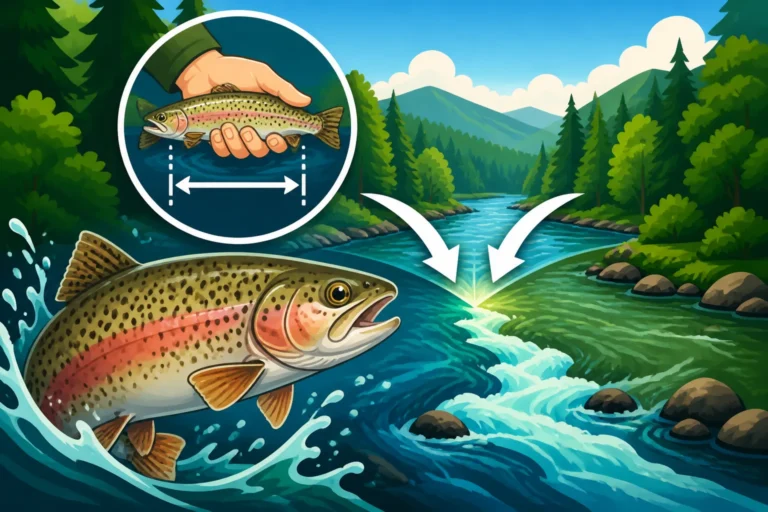
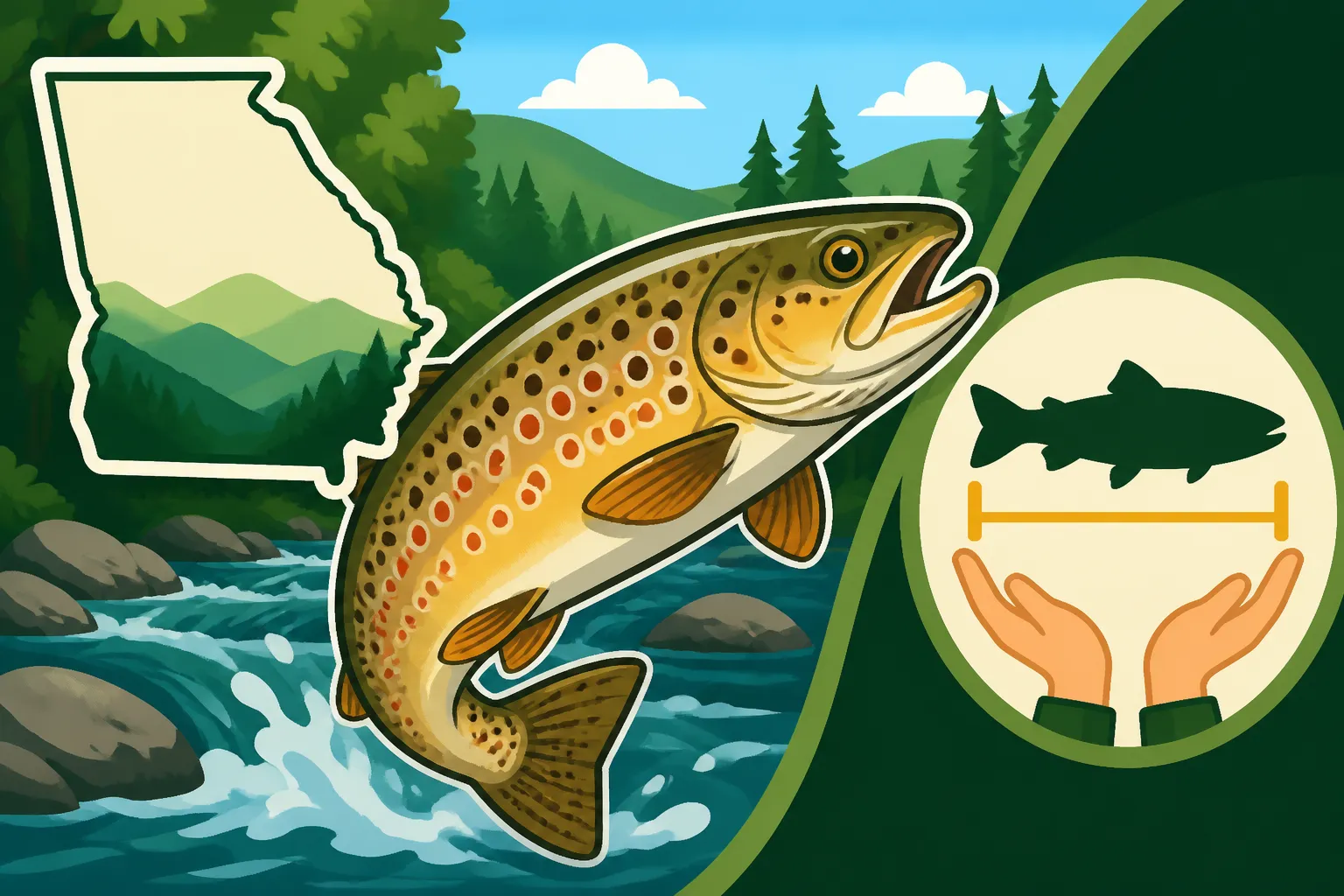
While the regulations for brook trout are exceptionally restrictive, rainbow and brown trout in Waters Creek are subject to slightly different, though still remarkably stringent, rules. For both rainbow and brown trout, the minimum size limit is an impressive 22 inches. Indeed, you read that correctly – twenty-two inches! This means that the majority of rainbow and brown trout you'll encounter, even those of considerable size, will likely fall short of this substantial threshold and therefore must be released. When a fish does meet this extraordinary size, the daily creel limit for these species is restricted to a single fish per angler.
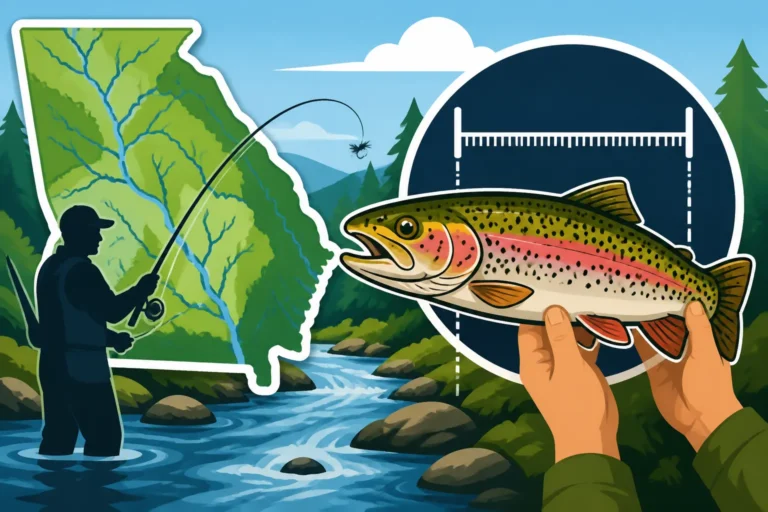
This 22-inch minimum is meticulously crafted to cultivate a "trophy trout" fishery, offering anglers the unique opportunity to pursue and potentially land exceptionally large fish while simultaneously safeguarding the bulk of the population. It fosters an environment where fish can mature to truly impressive dimensions, thereby contributing to an unforgettable angling experience. These larger fish, particularly the brown trout, can be incredibly elusive and challenging to entice at such sizes, rendering a legally harvestable specimen a genuine testament to skill and patience. When targeting these species, it is absolutely essential to carry a reliable tape measure and be prepared for diligent catch-and-release, handling every fish with the utmost care to maximize its chances of survival upon release. You'll find that a quality measuring tape, perhaps one readily available on Amazon, is an indispensable tool for adhering to these precise regulations. For more information on these specific species, check out our guides on Rainbow Trout Fishing in North Georgia's Mountain Streams and Brown Trout in Georgia: Where to Find Them.
Here's a quick summary table for clarity on Waters Creek's specific rules:
| Species | Minimum Size Limit (Waters Creek) | Daily Creel Limit (Waters Creek) |
|---|---|---|
| Brook Trout | 18 inches | Catch and Release (effectively) |
| Rainbow Trout | 22 inches | 1 fish |
| Brown Trout | 22 inches | 1 fish |
| General GA Trout Waters | No minimum size limit | 8 fish |
Why Waters Creek Has Such Special Rules
It's entirely understandable to question why Waters Creek implements such incredibly strict regulations when compared to many other streams across the state. This isn't merely to complicate things for anglers; rather, there are profound scientific and ecological rationales underpinning every single rule. The Georgia Department of Natural Resources (DNR) does not arbitrarily establish these figures; they are the culmination of meticulous research, comprehensive population assessments, and a forward-thinking, long-term vision for this unique aquatic ecosystem. Waters Creek, in many respects, stands as a prime illustration of successful, targeted conservation management within a highly popular fishing area.
Protecting Native Brook Trout Populations
One of the foremost justifications driving the stringent regulations within Waters Creek, particularly those pertaining to brook trout, is the critical imperative for the conservation of Georgia’s native brook trout. As previously highlighted, brook trout are the state's sole indigenous trout species, and their survival is contingent upon specific habitats characterized by cold, exceptionally clean, and relatively undisturbed water. Their populations have endured considerable pressure over centuries, stemming from activities such as logging, various forms of development, and competition from non-native, introduced species like rainbow and brown trout. Streams designated like Waters Creek thus represent vital strongholds for the persistence of these invaluable native fish.
The 18-inch minimum size limit imposed on brook trout is, fundamentally, a de facto catch-and-release regulation. It is an exceedingly rare occurrence for brook trout, if any, to achieve this size in Georgia's streams. This policy strategically allows the more prevalent, smaller brook trout to remain within the stream, mature, and successfully reproduce, thereby bolstering a healthier, more robust native population. It ensures the unbroken continuation of the genetic heritage of Georgia's brook trout, safeguarding a crucial component of the state's natural patrimony. This stands as a compelling example of how precisely tailored regulations can directly contribute to the survival and recovery of vulnerable species, rendering Waters Creek an exceptionally important locale for anglers who are genuinely invested in the future of fishing. If you're passionate about these unique fish, you might also find our article on Georgia's Only Native Trout Species of particular interest.
Balancing Angler Opportunity and Conservation
Beyond the crucial protection of native species, the overarching objective of Waters Creek's regulations is to meticulously balance the provision of a high-quality angling experience with the assurance of the fishery's long-term ecological health. These "trophy trout" regulations are specifically designed to cultivate a population of larger, more mature fish, which in turn presents anglers with the thrilling and challenging prospect of catching a truly monumental specimen. This represents a strategic management approach that consciously prioritizes the quality of the individual fish caught over the sheer quantity of fish harvested. Imagine the profound excitement of hooking a 20-inch brown trout, knowing it has thrived within the stream for years, honing its survival instincts – that unparalleled experience is precisely what these rules are engineered to protect and enhance.
By establishing such exceptionally high minimum size limits for both rainbow and brown trout (22 inches), the DNR ensures that the vast majority of fish caught are released unharmed, allowing them the opportunity to continue their growth trajectory. This also means that when an angler does manage to land a fish that meets the legal size, it is unequivocally a trophy, a profound testament to both their angling prowess and the efficacy of the ongoing conservation efforts. This approach effectively manages fishing pressure, diligently preventing overharvesting and enabling the ecosystem to flourish more naturally. It fundamentally shifts the focus from merely filling a cooler to the exhilarating thrill of the pursuit and the profound satisfaction derived from a successful, ethical release. This management philosophy aligns with strategies observed in other specialized trout waters and is instrumental in maintaining Waters Creek's status as one of the Best Trout Streams in Georgia.
Essential Gear and Techniques for Waters Creek
Fishing Waters Creek, with its uniquely stringent regulations, demands more than just a passing acquaintance with the rules; it necessitates adopting a particular mindset and equipping oneself with the most appropriate gear. This is decidedly not a location conducive to heavy-handed tactics or equipment that could inadvertently harm fish during the release process. Instead, it calls for a nuanced approach, meticulous handling, and an unwavering commitment to the "leave no trace" environmental ethic. Many anglers find themselves compelled to refine and upgrade their fishing approach when visiting waters of this caliber, and for very compelling reasons – the profound rewards of a pristine experience are undeniably worth the additional effort.
Recommended Tackle for Catch and Release
Given the paramount emphasis on catch-and-release, particularly for brook trout and the vast majority of rainbow and brown trout, your choice of tackle becomes absolutely critical. The ideal gear should facilitate delicate presentations, minimize any undue stress on the fish, and streamline quick, safe releases.
For spin fishing enthusiasts, a light-action rod, typically between 5 and 6 feet in length, paired with a compact spinning reel spooled with 4-6 pound test fluorocarbon or monofilament line, is generally considered optimal. Fluorocarbon is often favored due to its inherently low visibility in water and its superior abrasion resistance. Crucially, prioritize hooks that are either barbless or can be easily de-barbed; this significantly mitigates harm to the fish. Many discerning anglers will proactively purchase standard hooks and then use a pair of pliers to carefully crimp down the barb. Small inline spinners, compact spoons, or various soft plastics can prove highly effective here. When selecting lures, consider well-regarded brands such as Panther Martin or Mepps for spinners, or opt for small Rapala countdowns. You'll often discover an excellent selection of these high-quality lures conveniently available on Amazon, simplifying the process of stocking your tackle box.
Fly fishing is equally, if not more, popular and demonstrably effective on Waters Creek. A 3- or 4-weight fly rod, typically ranging from 7.5 to 8.5 feet in length, usually represents the perfect choice for this environment. Complement this with a floating line and a 7.5- to 9-foot leader tapering down to 4x or 5x tippet. Again, the use of barbless hooks for your flies is non-negotiable. Dry flies, nymphs, and small streamers all have their specific applications depending on the season and prevailing insect hatches. Carrying a high-quality pair of forceps or hemostats for precise hook removal, along with a rubber mesh landing net, will significantly assist in minimizing stress to any fish you land. You can readily find excellent options for fly fishing gear, including specialized fly boxes and durable forceps, with remarkable ease on Amazon. For those just starting their fly fishing journey, our guide on How to Fly Fish for Trout as a Beginner can provide valuable foundational knowledge.
Fly Fishing vs. Spin Fishing Considerations
Both fly fishing and spin fishing can yield exceptional success on Waters Creek, yet each method presents its own subtle nuances and fervent advocates.
Fly fishing is frequently perceived as the more traditional and purist approach to trout angling, offering a delicate and often irresistible presentation to wary fish. The extended length of the fly rod allows for incredibly precise line management and the ability to effectively reach across complex currents. It's a method that truly immerses you in the natural rhythms of the stream, encouraging keen observation of insect hatches and the meticulous matching of your fly patterns. While Waters Creek, with its pressured fish, might represent a challenging initial proving ground for novices, the journey of learning to fly fish is inherently rewarding. The sheer experience of witnessing a perfectly presented dry fly gently sipped by a wild brown trout is an unforgettable moment for any angler.
Spin fishing, conversely, offers a more direct and often more accessible approach, particularly for beginners. The inherent ability to cast lighter lures with precision into tight pockets of water or beneath overhanging branches can provide a distinct tactical advantage. With spin gear, you possess the versatility to effectively work various depths of the water column and cover a broader expanse of water. The core principle is to maintain small lure sizes and execute natural, enticing retrieves. Just remember that critical point about using barbless hooks! Mastering Spin Fishing Techniques for Trout can prove exceptionally effective here, facilitating a wide array of versatile presentations. Ultimately, the choice between fly and spin fishing is a matter of personal preference and developed skill, but in the context of Waters Creek, the unwavering emphasis must always remain on ethical angling practices and diligent fish care, irrespective of your chosen methodology.
Planning Your Trip to Waters Creek
A truly successful and deeply enjoyable fishing excursion to Waters Creek transcends merely understanding the trout size rules; it necessitates meticulous planning, a clear understanding of access points, and a wholehearted embrace of the overarching ethos of a trophy trout stream. This isn't the sort of location where a hurried, casual cast-and-dash approach will yield the best results. Instead, it offers an immersive, often challenging experience that generously rewards patience, profound respect for the natural environment, and a genuine willingness to adapt to its unique demands.
Access Points and Considerations
Waters Creek is nestled within the rugged beauty of the Blue Ridge Wildlife Management Area (WMA) in Lumpkin County, located in the heart of North Georgia. Access to this cherished waterway is typically managed and overseen by the Georgia DNR, meaning there may be specific gate hours for the WMA or certain WMA passes required, depending on the season and prevailing regulations. It is always a highly advisable practice to consult the official Georgia DNR website for the most up-to-date information regarding WMA access, as well as any associated fees or necessary permits. While planning your trip, a quick review of the Georgia Fishing License Guide would be a prudent first step, and rest assured, you will absolutely need a valid Georgia fishing license and a specific Mountain Trout License Add-On to fish these waters legally.
The creek itself can present considerable challenges for navigation. It is often characterized by its narrow confines, dense bankside vegetation, and may necessitate some moderately strenuous hiking to reach the most productive fishing spots. Waders are almost an absolute necessity, as you will invariably find yourself needing to navigate directly in the water. Durable, slip-resistant wading boots are equally crucial for maintaining safety on the often-slick rocks and uneven streambed. Be prepared for a genuinely rugged and immersive experience; indeed, this very ruggedness contributes significantly to the preservation of its wild and untamed character. Pack judiciously, favoring lighter gear but ensuring you bring ample water, nourishing snacks, and a compact first-aid kit. Remember, while the fishing can be exceptionally rewarding, the journey to and through the creek is an integral and enriching part of the overall adventure.
Navigating the Catch-and-Release Ethic
In a stream like Waters Creek, where the overwhelming majority of fish are destined for immediate release, mastering the techniques of proper catch-and-release is not merely a recommendation; it is an undeniable ethical imperative. Every angler bears a significant responsibility to minimize stress and any potential harm to the fish they catch, thereby ensuring their highest chance of survival to thrive another day and continue contributing to the stream's delicate ecosystem.
Here are some fundamental tips to guide your catch-and-release practices:
- Minimize Fight Time: Endeavor to bring the fish in swiftly yet gently, which significantly reduces its exhaustion.
- Wet Hands Only: Always make sure your hands are thoroughly wet before making any contact with a fish. This crucial step protects its delicate, protective slime coat, which is absolutely vital for its immune system and overall health.
- Keep Fish in Water: Strive to keep the fish submerged in the water as much as humanly possible, especially during the critical stages of hook removal and when taking photographs. If you absolutely must lift it, ensure its entire body is supported horizontally.
- Barbless Hooks: As previously emphasized, utilize barbless hooks for quick and easy removal. If your hooks possess barbs, use a pair of pliers to carefully and gently crimp them down flat.
- Proper Hook Removal: Employ forceps or hemostats to swiftly and meticulously remove the hook, aiming to cause minimal trauma.
- Revive Gently: Should a fish appear sluggish or disoriented, hold it upright in a gentle current, facing directly upstream, until it spontaneously swims away under its own power. Avoid the common mistake of pumping it back and forth, as this can force water over its gills in an unnatural and harmful direction.
Embracing this catch-and-release ethic is far more than just adhering to a set of rules; it's about demonstrating profound respect for the fish and the precious natural resource they represent. It ensures that future generations of anglers will continue to enjoy the same high-quality, pristine fishing experiences that Waters Creek offers today. It is truly about cherishing the experience itself, rather than solely focusing on the harvest. This conscientious approach is absolutely fundamental, particularly when considering other specialized regulations such as those found on Georgia's Delayed Harvest Trout Streams.
Waters Creek in the Broader Georgia Trout Fishing Context
Waters Creek undeniably holds a unique and special place within Georgia’s trout fishing landscape. However, it's incredibly helpful to understand how its distinct regulations fit into the broader spectrum of trout fishing opportunities across the state. Georgia offers a remarkably diverse range of experiences, from intensively stocked streams catering to "put-and-take" anglers to remote wilderness areas specifically managed for wild, native fish populations. Recognizing these distinctions can deepen your appreciation for Waters Creek's particular role and help you identify other compelling locations where you might wish to cast a line.
Statewide Trout Regulations Overview
For the vast majority of Georgia’s public trout streams, the governing regulations are considerably simpler and generally more permissive than those enforced on Waters Creek. Typically, anglers are permitted to retain eight trout per day, with no stipulated minimum size limit. This "general regulation" category encompasses many of the state's most popular stocked streams, where the primary objective is to provide abundant opportunities for anglers to harvest fish for consumption. These accessible waters are often ideal starting points for families or novice anglers, as the probability of catching and keeping a fish is relatively high.
Nevertheless, even within these general regulatory frameworks, specific exceptions do exist. Certain streams or designated sections of streams may feature alternative size or creel limits, or they might be explicitly classified as "trophy trout" waters (akin to Waters Creek), or fall under "delayed harvest" rules for specific seasons. This is precisely why staying abreast of the most recent Georgia Freshwater Fishing Rules is absolutely paramount. You might also encounter waters with unique seasonal designations, such as those prominently featured in the Georgia Trout Stocking Schedule, which are managed with a focus on high-volume stocking to maximize overall angler opportunities.
Comparing Waters Creek to Other North Georgia Streams
When you thoughtfully compare Waters Creek to other popular and well-known trout fishing destinations across North Georgia, its truly distinctive character becomes remarkably evident. Consider, for instance, the Toccoa River or specific sections of the Chattahoochee River, which are often extensively stocked and offer more liberal creel limits. These rivers provide truly fantastic angling experiences, especially for those who wish to bring home a meal of fresh trout, and you can delve deeper into these areas with our Toccoa River Trout Fishing in Georgia guide. The prevailing focus in these locations tends to be on achieving high catch rates and ensuring broad accessibility for a diverse range of anglers.
Other streams, such as certain stretches of Noontootla Creek, also implement special regulations, yet these may differ quite significantly from those found on Waters Creek. Some might impose higher minimum size limits than general waters but not to the extreme restrictiveness of Waters Creek's 18-inch brook trout or 22-inch rainbow/brown limits. This inherent variety reflects the adaptive management strategies of the DNR, which meticulously tailors regulations to align with the specific ecological conditions and management objectives unique to each distinct waterbody. Waters Creek singularly distinguishes itself as one of the most rigorously managed streams for the pursuit of trophy-sized fish and the critical protection of native brook trout, cementing its status as a quintessential bucket-list destination for serious trout anglers who seek both a profound challenge and an authentic wilderness experience. Comprehending these various Georgia Trout Stream Size Limits by Creek will undoubtedly enrich your overarching fishing knowledge within the state.
Conservation and the Future of Waters Creek Fishing
The stringent regulations enacted on Waters Creek serve as a powerful testament to the unwavering commitment to conservation embedded within the management of Georgia's waterways. While these rules may initially appear daunting or overly complex, they play an undeniably crucial role in guaranteeing that these pristine and exceptional fishing opportunities endure vibrantly for countless generations to come. Anglers who choose to visit Waters Creek are not merely there to pursue fish; they are, often unknowingly, contributing directly to a much larger and critically important ecological effort.
The Role of Anglers in Waters Creek's Health
Every single angler who graces the banks or wades the currents of Waters Creek exerts a direct and tangible impact on its health and future viability. By adhering meticulously to the established size and creel limits, diligently practicing responsible catch-and-release techniques, and consciously minimizing their environmental footprint, anglers actively transform themselves into indispensable participants in conservation. This commitment extends far beyond merely avoiding a punitive fine; it embodies a shared responsibility to safeguard and nurture a truly precious natural resource.
Consider this perspective: every small brook trout you carefully release because it falls below the 18-inch minimum size is granted a renewed opportunity to grow, mature, and eventually spawn, thereby significantly bolstering the native population. Every impressive 20-inch rainbow or brown trout, expertly and gently released, possesses the potential to evolve into a magnificent 22-inch trophy for another angler in an upcoming season, or more critically, to serve as a vital breeder, contributing genetically to the stream's future. The cumulative effect of thousands of anglers consistently making these responsible and ethical choices is precisely what enables Waters Creek to flourish as the premier trophy trout destination it is today. This cultivates a vibrant community of environmental stewards who inherently understand that the health and vitality of the stream are inextricably linked to the sustained quality of their fishing experience. The specific accessories you choose to bring, such as a specialized knot-tying tool or a thoughtfully designed fishing vest, both readily available on Amazon, can significantly enhance your fishing efficiency while simultaneously contributing to the preservation of the delicate aquatic environment.
The Long-Term Vision for Trophy Trout Management
The comprehensive management strategy implemented for Waters Creek is not merely a short-term, reactive fix; rather, it represents an integral component of a meticulously crafted, long-term vision articulated by the Georgia DNR. This vision is centered on the objective of providing a diverse array of high-quality fishing experiences across the entire state. By strategically dedicating specific streams, such as Waters Creek, to intensive trophy trout management, the DNR ensures that there are compelling options available for every conceivable type of angler, ranging from those seeking a casual, enjoyable catch-and-keep outing to those who harbor aspirations of landing a truly monumental fish.
This forward-thinking vision typically encompasses a continuous cycle of ongoing scientific research, strategic habitat improvements, and carefully planned stocking programs. The DNR consistently monitors crucial metrics such as fish populations, water quality parameters, and angler success rates to continually refine and optimize these regulations. The ultimate goal is to foster a sustainable and resilient fishery, one that is capable of gracefully withstanding various environmental pressures and consistently offering exceptional angling opportunities far into the future. Therefore, as you navigate the intricacies of Waters Creek's complex regulations, it's important to remember that you are actively participating in a meticulously crafted plan – a harmonious partnership between the inherent wonders of nature and judicious management – all specifically designed to ensure that the unparalleled thrill of hooking a truly massive trout in Georgia remains a tangible and exciting possibility for many, many years to come. This collective endeavor is intrinsically linked to the broader, overarching effort to safeguard the enduring health and remarkable diversity of Georgia's fish populations.
Disclaimer
Please remember that fishing regulations are subject to change. Always check the latest official Georgia Department of Natural Resources (DNR) Wildlife Resources Division regulations before heading out on the water. This guide is for informational purposes only and should not be considered a substitute for current official regulations.